

Should Finland ever face Russian aggression, Janne Ahtoniemi knows precisely what action to take. He would mobilize swiftly, though not in the manner many might expect.
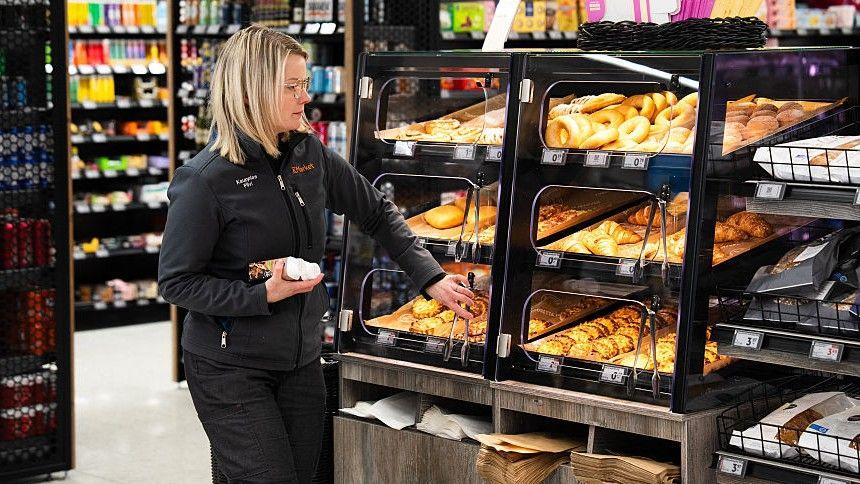
While one might assume Ahtoniemi is a soldier in the Finnish Army, his preparedness is intricately linked to his role at S Group, the nation’s largest retail network. His readiness embodies Finland’s unique approach to national security.
In the event of an invasion or another major assault—such as a nationwide cyberattack—S Group has meticulously developed detailed plans to safeguard national interests. Its paramount objective: to guarantee a stable food supply for Finland’s 5.6 million inhabitants.
This critical preparedness extends far beyond S Group. Numerous other major companies, classified within vital sectors ranging from defense and transportation to cybersecurity, also maintain their own comprehensive emergency protocols. These entities stand ready to fulfill crucial roles should a crisis unfold, whether stemming from international conflict or natural disaster.
“Finland’s robust supply security is forged from decades of consistent readiness and training,” states Janne Ahtoniemi, Head of Risk Management at S Group. He elaborates that “companies grasp this perspective, along with their integral role within it. This understanding is precisely why both society and businesses willingly invest in ensuring supply security.”
For decades, four Nordic nations—Finland, Sweden, Norway, and Denmark—have embraced a “total defense” strategy. This foundational concept underscores an unwavering collaboration between military and civilian sectors.
However, since Russia’s full-scale invasion of Ukraine in 2022, Finland has taken further decisive steps to bolster this concept, significantly elevating business involvement. Helsinki now aptly terms this integrated approach “comprehensive security.”
Given Finland’s extensive 1,340-kilometer direct border with Russia, the strategic direction of this policy is unequivocally unsurprising, underscoring its geopolitical imperative.

In 2025, the Finnish government is slated to formalize new policies within a pivotal document titled ‘Strategy for Societal Security,’ hailed as “the most important document guiding comprehensive security in Finland.”
Under this overarching framework, companies deemed critical are integrated into “readiness committees,” collaborating closely with representatives from both local and central authorities. These entities also actively participate in extensive national exercises, ensuring a coordinated response capability.
Preparations are not solely concentrated on the possibility of conventional warfare. They rigorously encompass a wide spectrum of potential threats, including nationwide cyberattacks, disruptions to vital food and water supplies, and assaults targeting the financial system.
Ahtoniemi emphasizes that “participating in exercises constitutes a significant investment for organizations.” S Group, his employer, also maintains a robust partnership with the National Emergency Supply Organization, further solidifying the nation’s resilience.
This unwavering commitment is mirrored by S Group’s primary competitor, retail chain Kesko.
“We aim to play our part in ensuring Finnish society can function every day, under any circumstances,” states Kesko executive Jyrki Tomminen. He further explains that “companies develop readiness to confront various disruption scenarios through joint emergency plans and rigorous exercises.”
Read also:
- ‘Ready for any attack’: The beautiful Finnish city on the frontline of Russia-West tensions
- Why neutral Sweden and Finland have now joined NATO
- The Finnish people don’t actually call their country ‘Finland’
Crucially, both companies and other food producers across Finland are legally mandated to maintain strategic reserves of essential commodities, including flour, sugar, and cooking oil.
These vital provisions are securely stored in specialized warehouses or robust underground bunkers, meticulously equipped with backup power generators to ensure continuity even during widespread outages.
Beyond corporate strategies, every adult in Finland is also expected to contribute to national defense, according to Tom Woolmore, an expert on Northern European security. He affirms, “This is not merely theory; it is actively practiced.”
A compelling illustration of this societal commitment is Professor Frank Martela. While he teaches philosophy at Aalto University in Helsinki, he is simultaneously registered as a Navy reservist, ready to be called upon during a national emergency.
However, given that the concept of security has transcended purely military strength, Martela’s call-up wouldn’t automatically place him back in the Navy. He anticipates being assigned to a different field, leveraging the skills and experiences acquired during his compulsory military service two decades prior. As he sips coffee at a Helsinki café, Martela calmly states, “When something happens, I will be told what to do.”

Jennifer De Paola, a psychologist from the University of Helsinki, elucidates that Finnish companies and society willingly contribute to this comprehensive security for two primary reasons: their profound trust in the government and their deep appreciation for a sense of security.
In her research, De Paola asked dozens of children aged 10–12 to draw happy and unhappy individuals, then explain their reasoning. “I initially expected to find a strong correlation between happiness and pleasure. However, it became evident that Finnish children associate happiness with a sense of security, and unhappiness with insecurity,” she reveals.
This profound focus on security extends into adulthood, cementing trust as a paramount Finnish value. De Paola asserts, “We genuinely trust institutions more than other nations. This encompasses the government, ministries, and politicians. The level of corruption in Finland is exceptionally low.”
Professor Frank Martela further underscores that a high degree of social equality also plays a crucial role. “The more egalitarian a society, the greater the mutual trust,” he notes. These intrinsic values, according to Woolmore, form the bedrock of Finland’s extraordinary resilience.
Despite this prevailing high level of trust, a strict veil of confidentiality is consistently maintained. Ahtoniemi from S Group, for instance, declined to disclose specific details of the company’s wartime plans, citing “confidential information.”
A similar stance is adopted by Kesko, whose spokesperson stated, “As per our standard practice, we do not elaborate further on emergency plans.”
- Lessons from the world’s happiest countries
- Can some people truly not do math from birth?
- Many Indonesian students struggle with math; Prabowo plans to introduce mathematics from kindergarten – ‘I asked how much 6+8, they answered 12’
Summary
Finland has adopted a unique “comprehensive security” strategy, integrating civilian sectors like major supermarkets such as S Group and Kesko into its national defense plans. This approach ensures vital supplies, particularly food, for its 5.6 million citizens during crises like Russian aggression, cyberattacks, or natural disasters. Critical companies develop detailed emergency plans, participate in national exercises, and are legally required to maintain strategic reserves of essential commodities in secure facilities.
This robust readiness is built on decades of consistent training, with businesses actively understanding their crucial role in national supply security. High public trust in the government, minimal corruption, and a deep societal appreciation for security and equality drive this widespread participation, where every adult is expected to contribute. However, specific details of corporate emergency plans remain confidential.
