
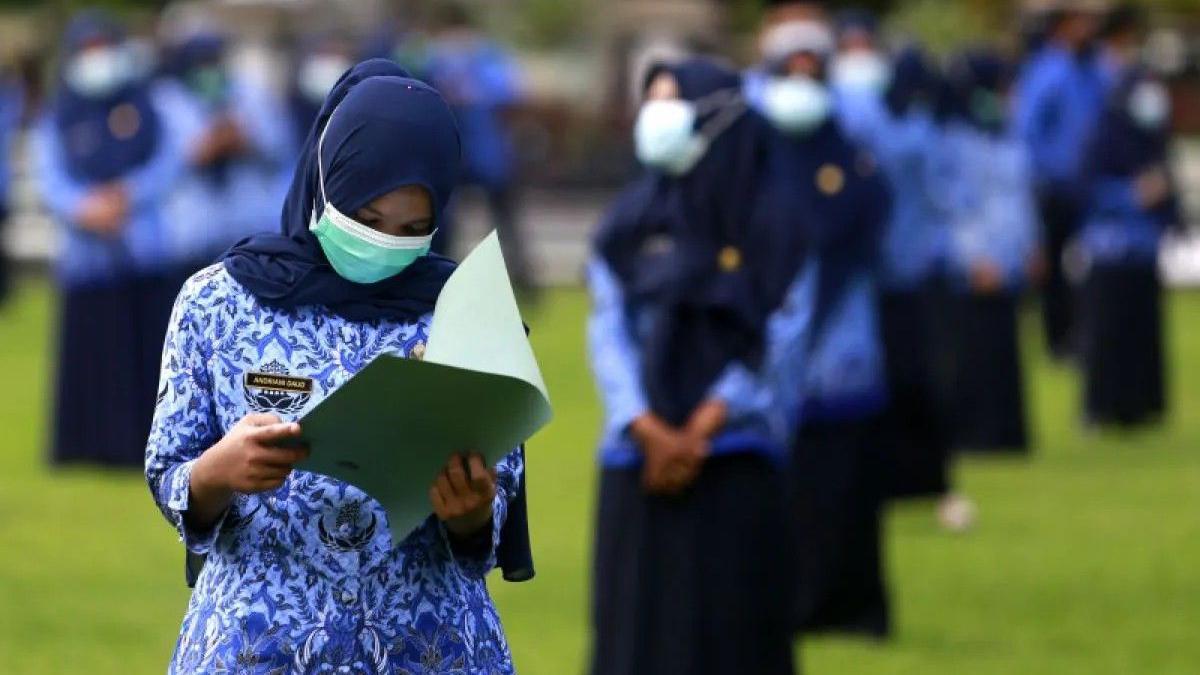

The Indonesian government is facing criticism for perceived inconsistency in its employment policies. While the fate of Civil Servant Candidates (CASN) hangs in the balance, purportedly due to budget efficiency concerns, the administration simultaneously fast-tracks the recruitment of 30,000 aspiring Indonesian Development Driver Scholars (SPPI). These SPPI recruits are slated to manage the newly established Merah Putih Village Cooperatives, raising questions about the government’s priorities.
This apparent contradiction follows a flurry of discussions on social media regarding the potential indefinite postponement of the 2026 CASN recruitment. The news has sparked widespread anxiety among prospective applicants, including individuals like Lina from Central Java, who had diligently prepared to participate in the selection process.
Expressing her frustration, Lina lamented, “If it’s postponed this year, how long am I expected to wait? Until next year?”
When pressed, Zudan Arif Fakrulloh, Head of the National Civil Service Agency (BKN), remained evasive about whether the 2026 CASN opening would indeed be delayed. He stated that the government is currently awaiting proposals for positions from various ministries, institutions, and regional administrations to determine the exact number of prospective civil servants (CPNS) required.
Meanwhile, Rico Ricardo Sirait, Head of the Information and Public Relations Bureau at the Ministry of Defense (Kemhan) Secretariat, confirmed that the registration process for the SPPI Merah Putih Cooperatives program is still being refined. Official announcements, he added, would follow its finalization.
The Recruitment of Indonesian Development Driver Scholars (SPPI) for Merah Putih Village Cooperatives
The debate surrounding the potential deferment of the 2026 Civil Servant Candidate (CASN) recruitment has been a dominant topic on social media platform X in recent days.
One prominent post from the verified account @direktoridosen declared: “CPNS 2026 recruitment postponed!! Indefinitely due to unfavorable state budget conditions.” This post garnered significant attention, with 754 comments and over 2 million views.
Around the same time, another verified account, @dosenkesmas, circulated a digital advertisement bearing the Ministry of Defense’s (Kemhan) header. This widely shared flyer on X announced the “National Recruitment of 30,000 SPPI for Merah Putih Village Cooperatives.”
The advertisement detailed attractive benefits and crucial responsibilities for the SPPI recruits. These included competitive salaries and allowances, leadership training provided by Kemhan, the Indonesian National Armed Forces (TNI), and the National Police (Polri), along with the primary duty of fostering rural economic development.
Eligibility requirements specified Indonesian citizenship, a minimum educational background of a Bachelor’s (S1) or Master’s (S2) degree, openness to all majors, and demonstrated leadership qualities.
The recruitment schedule indicated a commencement in June 2026, with applications to be submitted through the official channel: kemhan.go.id/sppi.
This particular post received 390 comments and garnered 323,000 views, indicating substantial public interest.

Seeking to verify the authenticity of this advertisement, BBC News Indonesia contacted Rico Ricardo Sirait, Head of the Information and Public Relations Bureau at the Kemhan Secretariat, to ascertain if the digital flyer was officially issued by his institution.
His response was a succinct, “No.”
Nevertheless, Rico acknowledged that the Indonesian Development Driver Scholars (SPPI) program is indeed a national priority, designed for inter-ministerial and inter-agency implementation.
He clarified that the Ministry of Defense’s (Kemhan) initial involvement primarily focuses on facilitating recruitment and human resource preparation, including training and provisioning. Broader policy aspects and placements, he added, are coordinated with the Ministry of Administrative and Bureaucratic Reform, the State Secretariat, the Ministry of Home Affairs, and the Ministry of Cooperatives.
“Regarding the numbers, roles, and qualifications, everything is still in the finalization stage,” he explained. “Generally, SPPI are projected to bolster the capacity of priority government programs in regional areas, without being confined to a single sector or specific academic background.”
Concerning the recruitment schedule, he further stated that the mechanisms and systems are currently undergoing refinement. Official announcements, he asserted, would be made once everything is finalized.
What About the 2026 Civil Servant Candidate (CASN) Recruitment?
State Secretary Minister Prasetyo Hadi indicated that he could not yet confirm this year’s CASN recruitment, as it remains under evaluation and discussion. This uncertainty stems from the government’s ongoing assessment of the nation’s fiscal capacity.
Consequently, it is anticipated that this year’s CASN intake will adopt a needs-based priority scheme, specifically targeting staffing requirements for key government programs.

Prasetyo Hadi stated on Tuesday (17/03), “There may be certain priorities that we must address first, as we need to consider our fiscal capabilities.” He did not, however, elaborate on which priority programs he was referring to.
He further mentioned that President Prabowo Subianto has instructed his staff to redesign staffing requirements for the government’s priority programs.
Each ministry, he claimed, has submitted its staffing needs, including those from regional governments. Nevertheless, he was unable to provide specific figures for the overall CASN requirement.
Notably, the Ministry of Administrative and Bureaucratic Reform (PANRB) had previously recorded that a staggering 160,000 state civil apparatus (ASN) would retire in 2025.
‘The Government Is Unfair’
Amidst the government’s indecisiveness, Lina, a prospective CASN applicant from Semarang, Central Java, finds herself in a state of anxious anticipation.
The 26-year-old shared that for the past year, she has diligently checked official government websites every morning, hopeful for news regarding the long-awaited CASN opening.
A graduate of a state Islamic religious university in Central Java, Lina has also been actively enhancing her knowledge and skills, determined to successfully pass the CASN selection.
For her, this year’s CASN recruitment represents a crucial plan and an opportunity she believes could profoundly change her life.

However, her hopes were rattled upon hearing whispers on social media about the potential postponement of the CASN recruitment.
She confessed to feeling shocked and disappointed after such a long wait. “If it’s postponed this year,” Lina questioned, “how long am I supposed to wait? Until next year?”
She explained, “My plan was to apply according to my major, which is at the Ministry of Religious Affairs, specifically in Islamic outreach.”
“I’ve never applied for CPNS before, but I intended to try this year if it opened. So, one could say this is my first attempt.”
To increase her chances of becoming an ASN, Lina has attended several free training sessions and even purchased study materials, despite holding a Bachelor’s degree in Islamic Communication and Broadcasting.
Her aspiration to work in a government institution was largely influenced by her parents. After two years of employment in the private sector with uncertain job status, her parents encouraged her to apply for CASN.
With conviction, she stated, “It’s definitely because of my parents’ urging, but increasingly, I’ve developed a strong resolve. I’m tired of constantly switching jobs, and becoming a civil servant is quite appealing for future economic security.”
She continued, “Over the past four years, I’ve applied for numerous jobs, ranging from marketing and call center positions to administrative roles. When I wanted to apply for an admin position, I even took a course first. Only after obtaining the certificate could I secure the job.”
She further questioned the government’s stance, deeming it unfair for immediately approving the recruitment of tens of thousands of Indonesian Development Driver Scholars (SPPI) for the Merah Putih Village Cooperatives program, while simultaneously leaving the fate of CASN applicants in limbo.
Although she acknowledged the possibility of applying for SPPI, Lina expressed concerns about her background not being suitable. Moreover, she felt the job information for SPPI was not as transparent as for CASN. “I don’t even know where to register,” she wondered, “Is it at the village office?” She feared, “This SPPI opportunity might only be for selected individuals.”
‘There Is Indeed a Sense of Disappointment’
For Naura Poetry, a resident of Bandung, West Java, becoming a state civil apparatus (ASN) is her dream profession.
This Food Technology graduate hopes to work at the Food and Drug Supervisory Agency (BPOM) or the Ministry of Industry, roles she feels align well with her educational background.
Naura elaborated, “I want a stable job, if possible. And if it aligns with my aspirations or my educational background, like BPOM, I think that would be even better.” She added, “By becoming an ASN, I might also be able to contribute more to the country.”

In 2024, Naura participated in the CASN selection but was unsuccessful. Despite currently working at a food processing factory, she intends to try again this year.
She plans to prepare herself a month before taking the test. However, as of now, she has received no information regarding the 2026 CASN intake.
Responding to the potential postponement of the 2026 CASN selection due to budget efficiency, Naura admitted her disappointment, even though she could understand the government’s policy. “If it’s truly for efficiency and other reasons, then it’s acceptable, as it’s a government policy,” the 24-year-old said. “While there is a sense of disappointment, it’s fine. I still have a job, and there might be other opportunities. But if it does open, I will definitely participate.”
When asked if she was interested in applying for the SPPI program, to be organized by the Ministry of Defense, Naura expressed a willingness to consider it.
She stated she would apply if the requirements and job description aligned with her capabilities. “I’d probably need to know the job description and the full requirements first,” she remarked. “If it’s a role I genuinely like and am suited for, I’d be very interested in applying.”
Based on her experience applying for CPNS in 2024, Naura observed that job formations for Food Technology graduates like herself, as well as for graduates of other “less popular” or seemingly limited majors, were still scarce.
She hopes that in the future, the government will open more positions for graduates from such fields. “Perhaps in the future,” she concluded, “for majors that are considered underrated or have fewer opportunities, more positions will be opened across various formations, to absorb a greater number of job seekers.”
Government Perceived as Inconsistent
Public policy observer Trubus Rahardiansyah noted that the nation’s fiscal space is indeed under immense pressure. This is due to the need to fund President Prabowo’s priority programs, while simultaneously bearing the burden of interest payments on national debt.
The situation has become even more challenging, he added, following the outbreak of conflict in the Middle East, which has triggered a surge in global crude oil prices. Consequently, the government claims it has decided to implement further efficiency measures.
Previously, several ministries and agencies had already experienced budget cuts ranging from 50% to 70% of their initial allocations. Funds for regional transfers (TKD) are also slated for a drastic reduction this year, projected to decrease by approximately 24% compared to the previous year.

Despite these fiscal challenges, Trubus views the government as appearing inconsistent. While CASN recruitment is subject to deliberation and hesitation, the SPPI program proceeds without apparent obstacles.
He told BBC News Indonesia, “I see the government as inconsistent. Why can Kemhan open SPPI recruitment while other ministries cannot?” He further posed a critical public question: “Why should the affairs of the Merah Putih Village Cooperatives fall under the Ministry of Defense?”
Trubus fears that this differential treatment will once again ignite a sense of injustice among the public. He drew a parallel to the government’s direct appointment of 32,000 core staff for the Nutritional Fulfillment Service Units (SPPG) as state civil apparatus (ASN) with government employee contracts (PPPK). In stark contrast, thousands of honorary teachers face uncertain futures despite their long wait for PPPK appointments.
He elaborated, “This implies that the government is toying with public expectations, which directly impacts public trust. If genuine efficiency is the goal, it should apply equally to everyone.”
According to Trubus, CASN recruitment should not be postponed merely for efficiency. Especially with 160,000 employees nearing retirement, these positions must be filled to ensure optimal public service. “Ministries and institutions are growing, and regions also need staff due to numerous retirements,” he pointed out. “The government also lacks a policy for postponing retirements.”
Furthermore, Trubus criticized the Ministry of Defense’s involvement in recruiting Indonesian Development Driver Scholars (SPPI) to manage the Merah Putih Village Cooperatives. He believes this task should rightfully fall under the purview of the Ministry of Cooperatives.
Public policy expert Ika Idris from Monash University echoed this sentiment, questioning the legal basis for SPPI recruitment specifically for KDMP. She noted that, in contrast, the recruitment of SPPI to head SPPG units was regulated by a presidential decree.
Additionally, Ika challenged Kemhan’s capacity to recruit suitable SPPI candidates who are expected to manage the 80,000 cooperatives envisioned by President Prabowo. “To my knowledge,” she stated, “these SPPI are intended to be operators or manager-level personnel. Can Kemhan truly find individuals with such competencies?”
“Moreover, my impression is that this SPPI recruitment will inevitably be centralized,” she added, “whereas cooperative management ought to consider local values in each village and the specific needs of its community.” She concluded, “I also observe a resemblance to the ‘Dwifungsi ABRI’ [dual function of the armed forces] era. It’s as if there’s a lack of trust in civilians; why isn’t this handled by the relevant ministries?”
State Budget Allocation for Merah Putih Village Cooperatives (KDMP): IDR 90 Trillion
Finance Minister Purbaya Yudhi Sadewa announced the disbursement of IDR 90 trillion for the development of the Merah Putih Village Cooperatives (KDMP) in the first quarter of 2026. This substantial fund aims to establish 30,000 cooperatives by March.
The government’s broader target is to have at least 50,000 KDMP established by August 2026.

Speaking at the APBN KiTa press conference at the Ministry of Finance on Monday (23/02), Purbaya stated, “As of February 20, 30,000 KDMP have been formed, and 24,186 outlets are under construction. This demonstrates solid progress on the ground.”
He noted that through this program, the government seeks to position villages as new growth centers. This is to be achieved by transforming village funds from mere routine expenditures into an investment instrument, characterized by productive and sustainable capital expenditure (capex).
Purbaya expressed hope that with the IDR 90 trillion in funding allocated for the first quarter of 2026, the KDMP could become a powerful leverage for village investment and an accelerator for national economic growth at the grassroots level.
These Merah Putih Village Cooperatives are envisioned as a storefront to meet community needs, ranging from fertilizers, LPG gas, and staple foods, to other essential distribution channels.
Furthermore, these cooperatives are designated to become suppliers of food ingredients for the free nutritious meal program (MBG).
To support KDMP operations, PT Agrinas Pangan Nusantara (Agrinas) is importing 35,000 4×4 pickup trucks and 35,000 six-wheel trucks from the Indian automotive manufacturer, Tata Motors. This procurement of thousands of vehicles has, however, faced strong opposition from the Indonesian Chamber of Commerce and Industry (Kadin Indonesia), which urged the cancellation of the import plan due to its potential to cripple the domestic automotive industry.
Journalists Yuli Saputra in Bandung, West Java, and Kamal in Semarang, Central Java, contributed to this report.
- Tens of thousands of SPPG staff to be appointed as ASN, but what about honorary teachers with no job security? – ‘Wounding the sense of justice’
- Are Merah Putih Cooperatives what farmers truly need? – ‘We are traumatized by these kinds of models’
- Controversy over Indian car imports for Merah Putih Cooperatives among high-ranking officials, local administrators feel excluded
- Merah Putih Cooperatives inaugurated by Prabowo – Potential for corruption and budget leaks estimated in trillions of rupiah, can it be prevented?
- Village heads protest village funds cut by up to 70% for Merah Putih Cooperatives – ‘How can we build infrastructure with IDR 360 million?’
- CPNS appointment postponement becomes an ‘economic blunder’ amidst waves of layoffs – ‘I became unemployed’
- CPNS recruitment: between extravagance and replacing retirees
- Prabowo accelerates CPNS appointments by June 2025 at the latest, PPPK by October 2025
- Government delays CPNS appointment schedule, tens of thousands protest – ‘Many have resigned’
Summary
The Indonesian government is facing criticism for perceived inconsistency in its employment policies. While the 2026 Civil Servant Candidate (CASN) recruitment is potentially delayed due to budget efficiency concerns, 30,000 Indonesian Development Driver Scholars (SPPI) are being recruited to manage the Merah Putih Village Cooperatives. This situation has caused frustration among prospective CASN applicants, even as the National Civil Service Agency (BKN) awaits proposals to determine specific civil servant needs.
The Ministry of Defense confirmed the SPPI program is a national priority, designed for inter-ministerial implementation, although a widely circulated recruitment flyer was not officially issued by them. Public policy observers view the government as inconsistent, questioning the Ministry of Defense’s role in managing cooperatives and fearing potential injustice. Concurrently, IDR 90 trillion has been disbursed for the Merah Putih Village Cooperatives, aiming to establish 30,000 by March 2026.
