
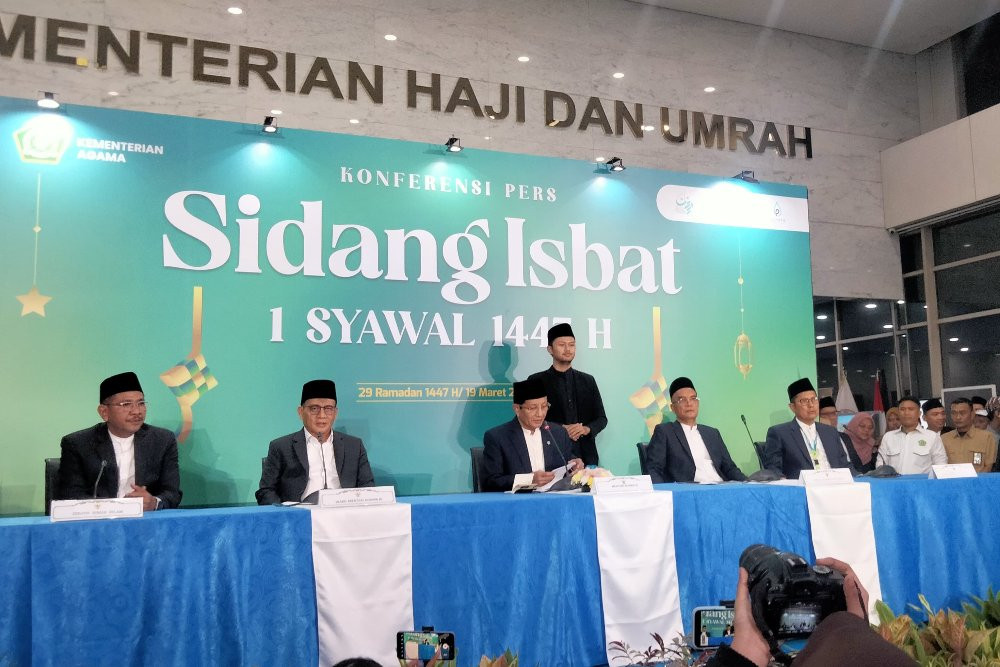

Teknowarta JAKARTA – The announcement of differing Eid al-Fitr 1447 H dates by Muhammadiyah and the Indonesian government has sparked considerable discussion across the nation. Muhammadiyah, one of Indonesia’s largest Islamic organizations, marked the festive day on Friday, March 20, 2026, while the government has set the celebration for Saturday, March 21, 2026. This distinction in the timing of the significant Islamic holiday frequently draws public attention.
Responding to the public discourse, the Chairman of Muhammadiyah’s Central Executive (PP), Haedar Nashir, urged the community not to let this difference in Eid al-Fitr celebration dates become a source of contention. He underscored that such discrepancies are a natural occurrence. Delivering his sermon at Universitas Muhammadiyah Yogyakarta (UMY) on Friday, March 20, 2026, Nashir emphasized the importance of restraint and mutual respect. “There is no need for us to amplify these differences, let alone seek self-justification by blaming others. In both civic and governmental contexts, all parties must exercise self-control,” he stated, as quoted by Muhammadiyah.or.id.
Haedar Nashir further called upon public figures and elites to refrain from making statements that could inflame tensions or muddy the atmosphere. He highlighted that Eid al-Fitr is a sacred occasion for optimal worship, designed to bring clarity to the soul and mind, and should not be overshadowed by disputes over dates. His message reinforced the idea that leaders should set a positive example, guiding the community towards unity rather than division during this significant religious holiday.
Nashir expressed his confidence in the Indonesian public’s ability to maturely navigate these differences. Looking ahead, he voiced a long-term aspiration for the widespread adoption of a single global calendar, which he believes would significantly minimize future discrepancies in the determination of major religious holidays across the globe. This forward-looking vision aims to foster greater harmony and predictability in religious observances.
Adding another layer to the discussion, Muhadjir Effendy, Chairman of Muhammadiyah’s Central Executive for Economy, Business, and Halal Industry, offered a nuanced perspective. He clarified that while adherence to the government’s authority remains paramount, the actual execution of Eid al-Fitr celebrations does not necessarily have to be identical. Effendy acknowledged the recurring dynamics of differing Eid celebrations and a common societal misconception that those not following the government’s specific date are somehow disobedient.
“We are accustomed to these differences,” Effendy stated from Central Jakarta, “and it should not be interpreted that adherence to the government automatically means celebrating Eid on the same day.” His remarks serve to decouple the concept of civic obedience from the specific timing of religious observances, aiming to foster understanding and reduce unnecessary friction within the diverse Indonesian society.
Summary
The differing Eid al-Fitr 1447 H dates between Muhammadiyah (March 20, 2026) and the Indonesian government (March 21, 2026) have generated public discussion. Muhammadiyah Chairman Haedar Nashir urged the community not to escalate these natural differences into conflict, emphasizing the need for self-control and mutual respect. He advised public figures to avoid statements that could inflame tensions, highlighting that Eid al-Fitr is a sacred occasion for worship, not dispute. Nashir also expressed a long-term aspiration for a single global calendar to minimize future discrepancies.
Adding to this, Muhadjir Effendy, another Muhammadiyah executive, clarified that while government authority is paramount, the actual execution of Eid celebrations doesn’t have to be identical. He addressed the common misconception that not following the government’s specific date equates to disobedience. Effendy stressed that such differences are customary and should be understood without misinterpretation, fostering unity within Indonesia’s diverse society.
