

Indonesia’s Corruption Eradication Commission (KPK) has announced its intent to swiftly summon former Minister of Religious Affairs, Yaqut Cholil Qoumas, also known as Gus Yaqut. This development follows the rejection of his pre-trial motion by the South Jakarta District Court judge on Wednesday, March 11th, paving the way for the anti-graft body to press ahead with its investigation into an alleged Hajj quota corruption case.
Gus Yaqut had sought to have his designation as a suspect by the KPK declared invalid through the pre-trial request. However, the court’s ruling affirmed the legitimacy of the KPK’s decision to name him a suspect, effectively validating the ongoing legal process against the former minister.
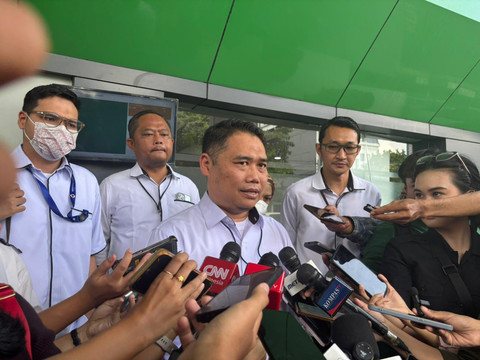
Director of Investigation and Execution at the KPK, Asep Guntur Rahayu, confirmed that the commission can now fully resume its probe into the alleged Hajj quota corruption for the 2023–2024 period, a case that implicates Gus Yaqut. “We will summon the individual concerned in the near future. A summons must be issued, of course, because his status is currently that of a suspect,” Asep told reporters after the pre-trial verdict reading at the South Jakarta District Court.
When pressed for a specific timeline for the summons, Asep indicated it would take place “this week,” underscoring the KPK’s readiness to advance the investigation. He also addressed the possibility of detaining Gus Yaqut during the upcoming examination, clarifying that detention is not an automatic consequence of being questioned as a suspect. Instead, the KPK considers various factors, highlighting that such decisions are part of the broader case strategy.
Asep further elaborated that the decision to detain a suspect is a crucial element of their case management strategy, particularly in complex situations involving multiple suspects. “It’s not just about fulfilling the elements of the article, but we also look at how to handle the case. Here, there is not just one suspect; there are other suspects as well,” he explained. He added that investigators would continue to question a number of witnesses and the suspects themselves to strengthen the evidentiary basis of the case. Throughout the pre-trial proceedings, the KPK had publicly affirmed its respect for the legal process initiated by Yaqut‘s legal team.
“We can now proceed to the next stage, which involves presenting the evidence. We will have a court hearing for the material evidence,” Asep concluded, signaling the KPK’s determination to bring the case to trial.
Kasus Kuota Haji
The Hajj quota corruption case revolves around an additional 20,000 quotas granted to Indonesian pilgrims for the 2024 Hajj season. It is alleged that the distribution of these quotas deviated from regulations, with the regular and special Hajj quotas being divided equally at 50:50, or 10,000 for each category. The KPK asserts that, according to standard regulations, the allocation should have been 92 percent for regular Hajj and 8 percent for special Hajj services.
This alleged maldistribution, which saw a significant increase in the special Hajj quota, led to suspicions that various travel agencies provided illicit fees to officials within the Ministry of Religious Affairs. The KPK has already named two individuals as suspects in this high-profile case: former Minister of Religious Affairs Yaqut Cholil Qoumas, known as Gus Yaqut, and his former special staff member, Ishfah Abidal Aziz, also known as Gus Alex. Both are charged under Article 2 paragraph (1) or Article 3 of the Anti-Corruption Law, which pertains to actions causing financial losses to the state. The KPK has disclosed that the state losses resulting from this case, as calculated by the Supreme Audit Agency (BPK), amount to a staggering Rp 622 billion.
Kata Gus Yaqut
In his defense, Gus Yaqut has argued that the 50:50 division of Hajj quotas was based on the principle of hifdzun nafs (preserving lives), necessitated by limited accommodation capacity in Saudi Arabia. Furthermore, Yaqut claimed that the quota distribution was grounded in a Memorandum of Understanding (MoU) between Indonesia and Saudi Arabia. This MoU, he stated, served as the foundation for the issuance of Ministerial Decree (KMA) Number 130 of 2024, which detailed the allocation of additional Hajj quotas.
However, the KPK has countered Gus Yaqut‘s explanation, stating that the principle of hifdzun nafs does not align with the initial objective behind the additional Hajj quotas. “If we cross-check with the background itself, it is not synchronized,” KPK spokesperson Budi Prasetyo told reporters on Tuesday, February 24th, prior to the pre-trial rejection. Budi elaborated that the additional quotas were provided by the Saudi Arabian government specifically to alleviate the long waiting lists for Indonesian pilgrims. Yet, the alleged irregular distribution of these quotas reportedly exacerbated the queues, contrary to their intended purpose.
Budi reiterated that, based on existing regulations, Hajj quota distribution should strictly adhere to a 92 percent allocation for regular Hajj and 8 percent for special Hajj. “The discretion exercised deviated from what should have been a maximum of 8 percent for the special Hajj quota, increasing significantly to 50 percent,” Budi emphasized, underscoring the gravity of the alleged deviation from established legal frameworks.
Summary
The Corruption Eradication Commission (KPK) is set to swiftly summon former Minister of Religious Affairs, Yaqut Cholil Qoumas (Gus Yaqut), following the rejection of his pre-trial motion by the South Jakarta District Court on March 11th. This ruling validates his suspect designation, allowing the anti-graft body to advance its investigation into the alleged Hajj quota corruption case. Director Asep Guntur Rahayu confirmed the summons would occur “this week,” clarifying that detention during questioning is a strategic decision, not an automatic consequence.
The case revolves around an alleged maldistribution of an additional 20,000 Hajj quotas for 2024, which were reportedly split 50:50 for regular and special Hajj, deviating from the standard 92:8 allocation. This alleged irregular distribution, leading to suspicions of illicit fees, resulted in state losses of Rp 622 billion. While Gus Yaqut cited the principle of *hifdzun nafs* and a Memorandum of Understanding for the quota division, the KPK asserts this contradicted the original purpose of the additional quotas, which was to alleviate pilgrim waiting lists.
