
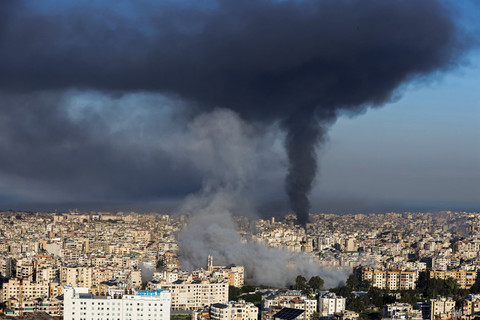
The intensifying conflict in Iran, which has rapidly spread across the Middle East, entered its seventh day on Friday, March 6. Concurrently, Israel announced a significant escalation in its military operations.
This latest phase was marked by a major Israeli assault on the southern regions of Beirut, Lebanon’s capital. Prior to unleashing these substantial attacks, Israel issued an urgent order for all civilians in Beirut to evacuate their homes, underscoring the severity of the impending offensive.
In its official announcement, the Israeli forces explicitly instructed Beirut residents to prioritize their personal safety and leave immediately. This directive triggered widespread panic and chaos across various areas of the Lebanese capital, as citizens scrambled to flee.
The reverberations of the Iran conflict are now being felt far beyond the traditional battlegrounds of the Middle East. Off the coast of Sri Lanka, a United States submarine reportedly engaged and fired upon an Iranian warship, indicating a broadening scope of naval confrontation.
Further afield, a separate incident saw a drone attack target an airport in Azerbaijan, highlighting the diverse and geographically dispersed nature of current global tensions emanating from the primary conflict zone.
Beyond military engagements, the political landscape is also seeing dramatic shifts. U.S. President Donald Trump has publicly declared his intention to intervene in the selection process for Iran’s next Supreme Leader. This follows the reported death of the incumbent, Ali Khamenei, on Saturday, February 28.
“I will be involved in the appointment process,” Trump stated, as quoted by AFP, signaling a direct and unprecedented level of U.S. engagement in Iran’s internal political succession.
Trump notably rejected the prospect of Khamenei’s son, Mojtaba Khamenei, assuming the pivotal role of Iran’s Supreme Leader. Despite Mojtaba being widely considered one of the strongest candidates for the position, Trump’s stance was unequivocal.
“Khamenei’s son is unacceptable to me,” Trump asserted. “We desire someone who can usher in harmony and peace for Iran,” he added, outlining his vision for the country’s future leadership amidst the ongoing turmoil.
Regarding the human toll of the conflict, an Iranian NGO has reported that the number of fatalities on the Iranian side has reached 1,230 since the initial U.S. and Israeli attacks. It is important to note that this figure remains independently unverified.
On the American side, six U.S. soldiers have reportedly lost their lives while participating in military operations involved in the invasion of Iran, underscoring the significant risks and sacrifices faced by international forces.
