
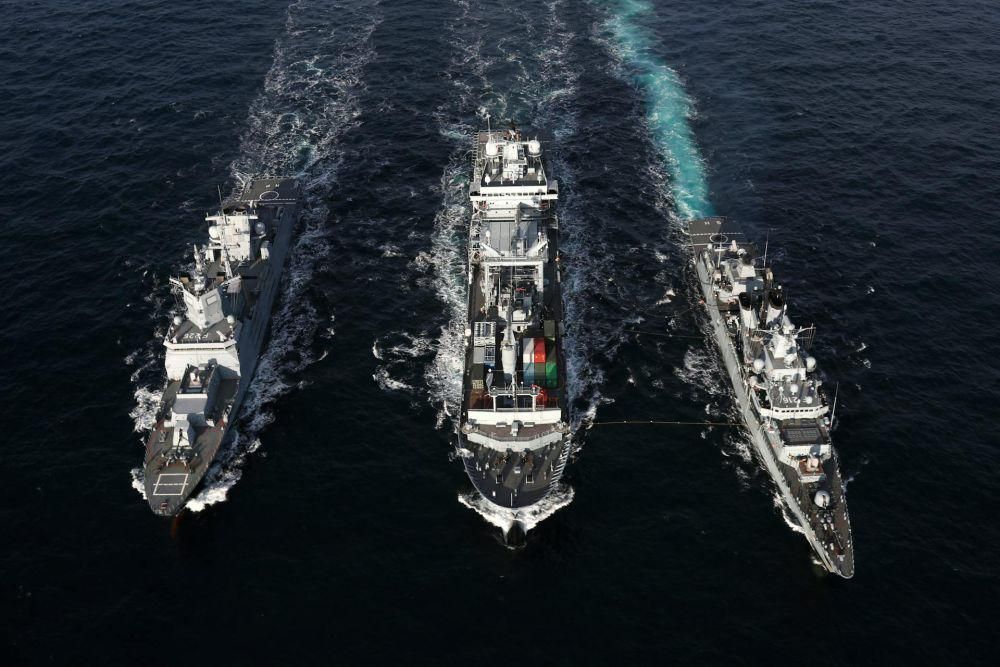
In a significant escalation of ongoing international tensions, US Defense Secretary Pete Hegseth has confirmed that a United States Navy submarine successfully sank the Iranian frigate IRIS Dena with one or more torpedoes. This unprecedented naval engagement occurred in international waters off the southern coast of Sri Lanka on the night of Tuesday, April 3, 2026. Hegseth described the incident as the first hostile vessel sinking by a US submarine torpedo since World War II, eerily characterizing it as a “silent death.”
“An American submarine sank an Iranian warship that believed itself safe in international waters,” Hegseth stated, as quoted by The Guardian. He further elaborated that the vessel was struck by a torpedo, marking the first time a hostile ship has been sunk by this method since the Second World War. Hegseth underscored the historical parallel, recalling that during that wartime era, then known as the Department of War, the U.S. fought for decisive victory.
1. IRIS Dena carrying 180 crew members returning from India 
The IRIS Dena, a state-of-the-art frigate belonging to the Iranian navy, was reportedly fully equipped with an array of weaponry, including surface-to-air missiles, anti-ship missiles, cannons, machine guns, and torpedo launchers. At the time of the incident, it was carrying approximately 180 crew members and was en route home from Vishakapatnam, India, where it had participated in the International Fleet Review 2026 just a week prior.
A distress signal from the frigate was received by the Sri Lankan coast guard at 5:08 AM local time on Wednesday, April 4, 2026, after the crew reported an explosion within the hull. Sri Lankan Foreign Minister Vijitha Herath informed parliament of the developing situation, prompting the Sri Lankan navy to dispatch its first vessel at 6:00 AM and a second at 7:00 AM, adhering to international maritime search and rescue conventions. The naval incident occurred 44 nautical miles (approximately 75 kilometers) from the city of Galle, placing it just outside Sri Lanka’s territorial waters but still within its exclusive economic zone. A spokesperson for the Sri Lankan navy confirmed that no other vessels or aircraft were detected near the site during the incident, adding to the mystery surrounding the attack.
2. Sri Lankan authorities find 83 bodies at the scene 
Search and rescue efforts by Sri Lankan authorities at the scene led to the recovery of at least 83 bodies, while 32 injured crew members were evacuated and transported to a hospital in Galle for urgent medical attention. The search operation continues for any potential survivors. The Iranian Embassy in Colombo dispatched two officers to Galle to directly meet with the survivors. Through unofficial communications, embassy officials conveyed to Sri Lankan authorities their firm belief that the vessel was targeted by a US submarine, suggesting that its defense and counter-attack systems had been electromagnetically neutralized prior to the torpedo impact. Concurrently, a Sri Lankan defense source indicated that two torpedoes are suspected to have struck the mid-section of the frigate’s hull.
3. Attack occurs outside the Middle East during the conflict 
This submarine attack marks the first United States military operation against Iranian forces outside the Middle East region during the ongoing conflict. The incident transpired on the fifth day of a combined US and Israeli aerial assault on Iran, which followed the death of Supreme Leader Ayatollah Ali Khamenei. This broader offensive resulted in the deaths of numerous senior officials and nearly 800 other individuals, including dozens of schoolgirls, alongside significant damage to Iran’s ballistic missile and air defense systems.
In retaliation, Iran had launched drones and missiles toward Israel and US-affiliated targets in several Gulf states. These retaliatory strikes claimed the lives of several individuals, including six US military personnel, and left many more wounded. Following these events, Iran unilaterally shut down all shipping lanes in the vital Strait of Hormuz. The nearest major US naval base in the Indian Ocean, located in Diego Garcia, is situated more than 1,000 miles (approximately 1,600 kilometers) from Sri Lanka, underscoring the logistical reach required for such an operation.
Profil Hassan Rouhani, Mantan Presiden Iran yang Kini Kembali Diperhitungkan Kelompok Kurdi di Irak Bersiap Lancarkan Serangan Darat ke Iran Sugiono Ungkap Alasan Prabowo Sampaikan Duka soal Iran Lewat Surat
Summary
A United States Navy submarine sank the Iranian frigate IRIS Dena off the coast of Sri Lanka on April 3, 2026, an incident confirmed by US Defense Secretary Pete Hegseth as the first hostile vessel sinking by a US submarine torpedo since World War II. The state-of-the-art frigate, carrying approximately 180 crew members, was returning from India when a distress signal reported an explosion within its hull. Sri Lankan authorities recovered 83 bodies and evacuated 32 injured crew members, while the search for survivors continues.
This attack, which a Sri Lankan defense source suspects involved two torpedoes, marks the first US military operation against Iranian forces outside the Middle East during the ongoing conflict. The incident followed a combined US and Israeli aerial assault on Iran, as well as Iran’s retaliatory strikes against Israel and US-affiliated targets. The Iranian Embassy in Colombo unofficially conveyed its belief that the vessel’s defense systems were electromagnetically neutralized prior to the torpedo impact.
