
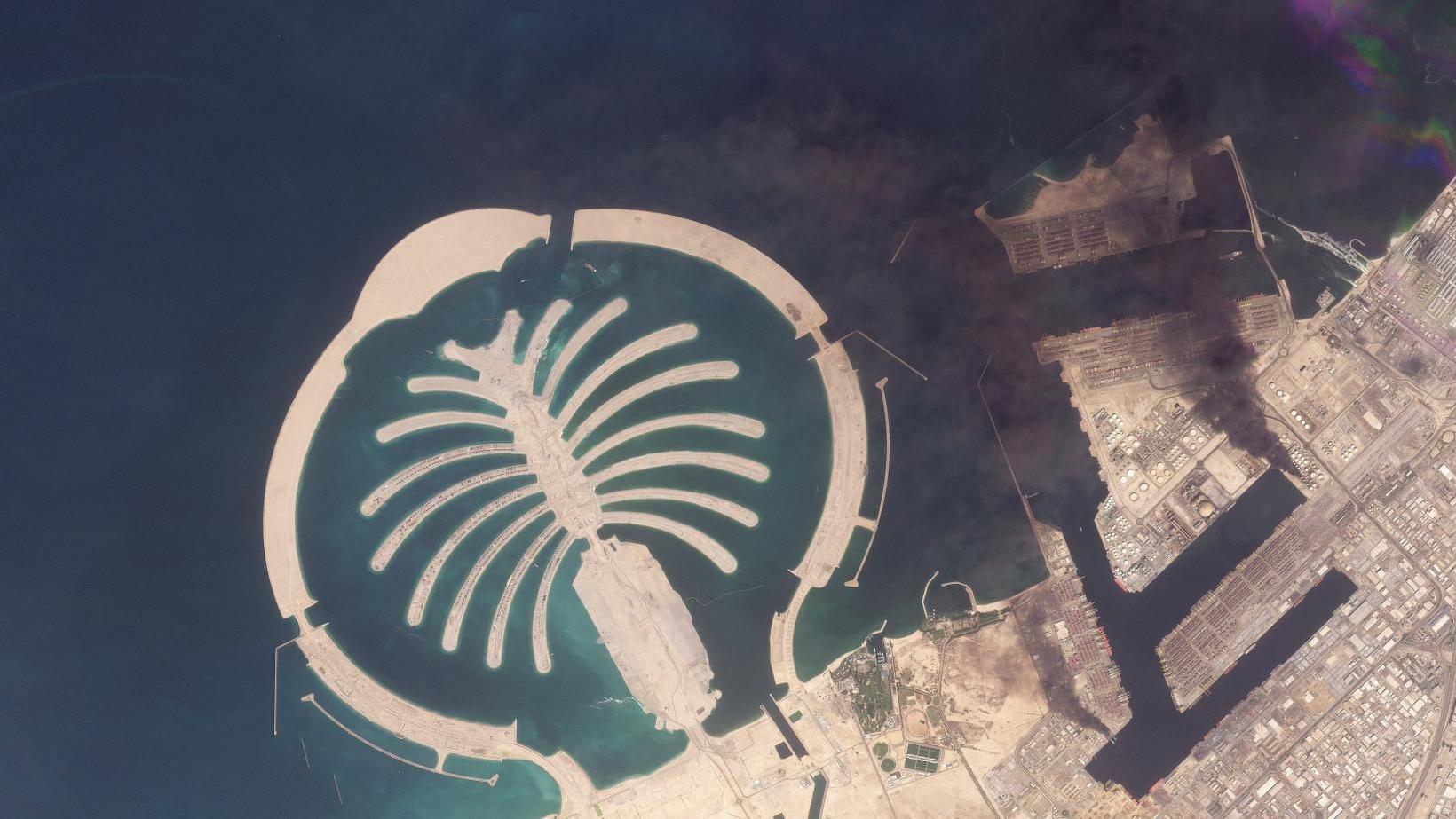

Iran’s retaliatory strikes against Gulf nations have significantly tarnished their carefully cultivated image as safe and prosperous havens. The critical question now looms: will these nations retaliate against Iran’s aggression, inevitably dragging them deeper into a broader regional conflict?
The Gulf states now find themselves unwillingly positioned on the front lines of the latest Middle East war, and their frustration is palpable. Iran launched hundreds of missiles and drones at its neighboring Arab states, responding to perceived US-Israeli air strikes. These barrages targeted American military bases within their territories, alongside vital civilian and energy infrastructure.
Through these actions, Iran directly challenged the Gulf’s established reputation as a secure and thriving hub for travel, tourism, and finance. Furthermore, the attacks actively disrupted the region’s crucial oil and gas industry, striking at the very heart of their economic stability. This is a conflict that Arab nations neither desired nor sought, having actively worked to prevent its escalation.
Now, they face the agonizing decision of whether to be drawn into what they unequivocally describe as Iran’s “dangerous” attacks. Qatar’s Foreign Ministry spokesperson, Majed al Ansari, minced no words during a press conference on Tuesday, declaring, “All red lines have been crossed.” He emphasized to reporters, “Attacks on our sovereignty are constant.”
Al Ansari detailed the severity of the situation, stating, “There have been attacks on infrastructure. There have been attacks on our residential areas. And the impact of these attacks is very clear.” Regarding potential retaliation, he affirmed, “All options are in the hands of our leadership. But we must make it clear that attacks like this will not be tolerated and should not be tolerated.”
While the majority of Iran’s missiles were successfully intercepted across the region, falling debris caused fires and tragically claimed civilian lives. Drones, often more adept at penetrating air defenses, typically resulted in minimal direct damage but nevertheless sowed chaos, disrupting vital trade and travel routes. This calculated strategy by Iran appears aimed at raising the stakes for its Arab neighbors, hoping they will, in turn, exert increased pressure on the United States to bring an end to the ongoing conflict.
According to the Financial Times, Iran is believed to have launched numerous drones and missiles not only at Israel but also at the United Arab Emirates, a major commercial and tourism epicenter in the Gulf. The region’s vital oil and gas industry, susceptible to political leveraging by Iran, could send devastating shockwaves through the global economy should the situation escalate further.

However, Tehran’s strategy carries the inherent risk of backfiring. Iran’s actions could inadvertently push Gulf states closer to Washington, potentially even compelling them to join broader war efforts in some capacity. To date, these nations have steadfastly refused to allow the United States to utilize their airspace and territorial lands for launching strikes against Iran. Yet, this delicate position could shift; at some point, they may decide that direct participation in military operations becomes unavoidable.
For now, Gulf states have not reached that critical juncture, with Arab nations primarily focused on bolstering their defensive capabilities. Much, however, hinges on the duration and intensity of the current conflict. Many nations in the region remain profoundly reluctant to be perceived as overtly siding with Israel in the ongoing hostilities.
Israel’s deadly and destructive actions in Gaza, launched in response to the October 2023 Hamas attack, alongside its military interventions in countries like Lebanon and Syria, have significantly strained relations among Arab nations. Their anger was palpable when Israel bombed Qatar last year in an attempt to assassinate a Hamas leader. Despite these complex dynamics, Iran’s aggressive strikes have undeniably forged a stronger sense of unity among the Gulf states.

In a powerful display of solidarity, the six members of the Gulf Cooperation Council (GCC)—Saudi Arabia, Kuwait, Qatar, Bahrain, the United Arab Emirates, and Oman—convened an emergency session on Sunday. They collectively declared their unwavering solidarity and pledged to “take all necessary measures to maintain their security and stability.” Furthermore, these six nations committed to “protecting their territories, citizens, and residents, including options to respond to such aggression.”
Anwar Gargash, a senior diplomatic advisor to the president of the United Arab Emirates, urged Iran to recognize the profound implications of its actions. In a post on X, he asserted, “Your war is not with your neighbors.” He passionately appealed for de-escalation, advising, “Return to your surroundings, and deal with your neighbors with common sense and responsibility before the circle of isolation and escalation expands.”
- ‘This is not the Dubai we know’ – Witnesses and tourists describe Iran’s attacks on the United Arab Emirates
- What happens if Iran closes the Strait of Hormuz, the global oil choke point?
- Conflict expands: Israel launches new attacks on Iran, CIA station in Saudi Arabia hit by drone
- US-Israel attack Iran, where are Russia and China?
Summary
Iran’s retaliatory strikes against neighboring Arab states, targeting US bases, civilian, and energy infrastructure, have significantly damaged the Gulf’s reputation as a secure hub. These nations find themselves unwillingly on the conflict’s front lines, with Qatar affirming that “all red lines have been crossed” due to constant attacks on their sovereignty. The Gulf states now face the critical decision of whether to retaliate, potentially dragging them deeper into a regional war they actively sought to prevent.
Iran’s actions, aimed at pressuring Arab neighbors to influence the U.S., risk inadvertently pushing Gulf states closer to Washington and potential military involvement, despite their reluctance to side with Israel. In response, the six members of the Gulf Cooperation Council (GCC) have shown solidarity, pledging to take all necessary measures to maintain security and protect their territories and citizens. Senior diplomatic advisors from the UAE have urged Iran to de-escalate and deal with its neighbors with common sense to avoid further isolation.
