
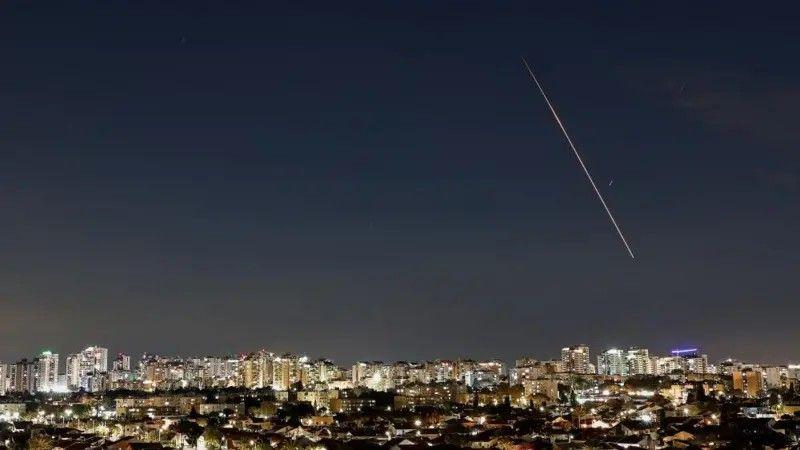

The Middle East conflict has escalated significantly following recent strikes by the United States and Israel against Iran. In a swift retaliation, the Iran-backed Hezbollah group in Lebanon launched a barrage of rockets into Israeli territory, resulting in the deaths of at least nine civilians. Israel quickly responded to these attacks, not only with military action but also by urging residents in several Lebanese villages to evacuate immediately.
Amidst the escalating regional tensions, the Israel Defense Forces (IDF) issued a critical evacuation order for residents across more than 50 villages in Lebanon. This directive came after Hezbollah, a powerful Iran-backed organization, initiated rocket attacks against Israel. The IDF has specifically focused on evacuating elderly residents from these vulnerable communities, as the mutual exchange of rocket fire intensified between Israel and Hezbollah.
The mass evacuations sparked considerable disruption in Lebanon, with widespread traffic congestion reported as people rushed to leave their homes. One resident, speaking to the BBC, described the dire situation as “very sad,” reflecting the profound distress and displacement gripping affected populations.
Adding to the severe escalation, Iranian missiles had previously struck the Israeli city of Beit Shemesh, tragically claiming the lives of at least nine people, according to Israel’s ambulance services. This particular strike marked the deadliest attack on Israel since the onset of the current conflict, highlighting the perilous security landscape.
The conflict has also impacted U.S. forces, with U.S. Central Command previously reporting the deaths of three American military personnel and five others sustaining “critically wounded” injuries in the ongoing clashes. President Donald Trump, addressing the grim development, cautioned that “there will likely be more” American casualties as the conflict unfolds. In response, Israel has vowed to intensify its assaults against Iran, while President Trump indicated that the U.S. military campaign could extend for several weeks, signaling a protracted confrontation.
Further underscoring the broad regional instability, the UK Ministry of Defence confirmed an “alleged drone attack” targeted a UK Royal Air Force (RAF) base in Cyprus on Sunday night. This incident points to the widening geographical scope of the conflict’s repercussions.
Israel Urges Lebanese Evacuation, Beirut Rocked by Explosions
As part of its retaliatory measures, Israel formally urged residents in over 50 towns and villages across Lebanon to evacuate, issuing stern warnings of impending attacks. The Israeli advisory explicitly instructed inhabitants in the identified areas to relocate at least 1,000 meters into open terrain for their safety. The warning stated, “For your safety, you must immediately evacuate your homes and move at least 1,000 meters from the village to an open area,” adding a stark caution: “Anyone who is near Hezbollah members, its facilities, or its military assets risks their life.”
Meanwhile, in Lebanon’s capital, Beirut, residents were jolted awake by a series of powerful explosions that reverberated across the city just before 3:00 AM local time, further intensifying the atmosphere of fear and uncertainty. The Israeli military initiated strikes against Hezbollah targets following the Iran-backed group’s rocket fire into northern Israel.
In a statement, Hezbollah claimed its actions were a direct retaliation for the killing of Iran’s Supreme Leader, Ayatollah Ali Khamenei. The group characterized its assault on Israel as a “legitimate act of self-defense” and declared it had launched a “barrage of rockets and a large number of drones” at missile defense sites located in Israel’s northern region. The Israeli military subsequently confirmed that it had indeed launched counter-attacks in response. Israel articulated its military objective as being “to counter Hezbollah’s decision to join” the conflict and to prevent the group from “becoming a threat to the state of Israel and endangering civilians in northern Israel.”
The current hostilities unfold despite a U.S.-mediated ceasefire agreement reached in 2024 between Israel and Lebanon, which had aimed to conclude over a year of intense fighting with Hezbollah, culminating in a significant Israeli offensive against the Iran-backed group. Since the agreement, both parties have repeatedly accused each other of violating the terms of the ceasefire. Despite this formal agreement, following 13 months of prior conflict, Israel has continued to conduct nearly daily strikes in Lebanon, targeting locations it alleges are linked to Hezbollah.
Iranian Missiles Strike Beit Shemesh, Israel
Further details emerged regarding the devastating Iranian missile strike on the Israeli city of Beit Shemesh, which, according to Israeli ambulance services, claimed the lives of at least nine individuals. This attack stands as the deadliest sustained by Israel since the conflict’s initial eruption.
The broad economic repercussions of the Iranian attacks were quickly felt across the region. Airline stock prices plummeted in Asia-Pacific markets as the strikes directly impacted neighboring countries’ airports, a critical economic nerve center. Concurrently, global oil prices surged after maritime vessels were attacked near the strategic Strait of Hormuz, a vital shipping lane. Members of the Gulf Cooperation Council (GCC) have unequivocally accused Iran of violating their sovereignty, highlighting widespread economic disruption across the Gulf region due to the ongoing aerial strikes.
Hezbollah Launches Rockets and Drones at Israel
Hezbollah officially confirmed its launch of both missiles and drones toward Israel. This announcement followed an earlier statement from the Israeli military indicating that it had struck targets in Lebanon in response to initial missile attacks from Hezbollah. The Iran-backed group explicitly stated that these launches were in retaliation for the assassination of Iran’s Supreme Leader, Ali Khamenei. According to the Israeli military, the projectiles ultimately landed in open areas within Israeli territory.
Alleged Drone Attack on UK Military Base in Cyprus
In a significant development reflecting the widening scope of the conflict, the UK Ministry of Defence confirmed that a UK Royal Air Force (RAF) base in Cyprus was subjected to an “alleged drone attack” on Sunday night. The Ministry of Defence reported that armed forces personnel responded to the incident at RAF Akrotiri in Cyprus around midnight local time. Fortunately, no casualties were reported in connection with the suspected attack. The Ministry of Defence affirmed its commitment, stating, “Protection of our forces in the region is at the highest level.” This incident occurred after Defense Secretary John Healey had previously warned that British forces and civilians in the Middle East faced the risk of “indiscriminate attacks” by Iran. His warning followed the killing of Iran’s Supreme Leader, Ayatollah Ali Khamenei, during joint U.S. and Israeli airstrikes.
- Global oil prices saw a significant surge following attacks on maritime vessels near the critical Strait of Hormuz.
- Iran’s Supreme Leader, Ayatollah Ali Khamenei, died in coordinated U.S. and Israeli attacks.
- President Prabowo offered to mediate the escalating conflict between the U.S., Israel, and Iran, a proposal widely described as ‘highly unrealistic’.
Summary
The Middle East conflict has significantly escalated following recent US and Israeli strikes against Iran. In retaliation, Iran-backed Hezbollah launched rockets into Israeli territory, killing at least nine civilians and prompting Israel to respond militarily, urging evacuations in over 50 Lebanese villages. Separately, Iranian missiles previously struck Beit Shemesh, Israel, also claiming nine lives in the deadliest attack since the conflict began. Three American military personnel were killed, with President Trump warning of further casualties as the conflict unfolds.
This widespread escalation includes an alleged drone attack on a UK Royal Air Force base in Cyprus, signaling a widening geographical scope. Hezbollah claimed its actions were in retaliation for the assassination of Iran’s Supreme Leader, Ayatollah Ali Khamenei, during joint US and Israeli airstrikes. The hostilities persist despite a 2024 US-mediated ceasefire between Israel and Lebanon, which both parties have repeatedly accused each other of violating. The conflict has also triggered economic repercussions, with global oil prices surging and airline stock prices plummeting.
