
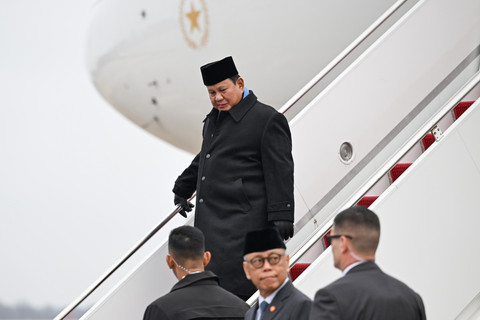
The United States (US) and Israel launched coordinated attacks on Iran on Saturday, February 28, prompting immediate retaliation from Iran. In response to the escalating tensions, Indonesian President Prabowo Subianto declared his readiness to facilitate dialogue aimed at restoring a conducive security environment in the region.
The Indonesian Ministry of Foreign Affairs (Kemlu) announced on Saturday, February 28, that “should both parties agree, the President of Indonesia is prepared to travel to Tehran to conduct mediation efforts.”
The Ministry of Foreign Affairs further elaborated on Indonesia’s stance, issuing the following comprehensive statement:
Indonesia deeply regrets the failure of negotiations between the United States and Iran, which has directly led to a significant military escalation across the Middle East.
Indonesia urgently calls upon all parties involved to exercise maximum restraint and prioritize dialogue and diplomatic solutions.
Furthermore, Indonesia reiterates the paramount importance of respecting the sovereignty and territorial integrity of all nations and resolving disputes through peaceful means.
The Indonesian government, through its President, the Republic of Indonesia, expresses its unwavering readiness to facilitate dialogue aimed at re-establishing a stable and conducive security environment. Crucially, if both sides concur, the Indonesian President is willing to undertake a visit to Tehran for direct mediation.
The heightened tensions in the Middle East possess the grave potential to destabilize regional security, impacting global peace and safety.
Israeli Military Targets Locations Where Iranian Officials Gathered in Tehran
News agency AFP reported that the Israeli military specifically targeted locations where senior Iranian officials were convened during its attack on the capital, Tehran, on Saturday, February 28.
AFP further detailed that “this morning’s strikes were simultaneously carried out at multiple sites across Tehran where high-ranking officials within Iran’s political-security apparatus were gathered.”
Beyond Tehran, Israel’s offensive against Iran also encompassed strikes in several other cities, including Isfahan, Qom, Karaj, and Kermanshah. These Israeli actions were reportedly followed by an announcement from then-US President Donald Trump, who declared the commencement of US military operations in Iran.
Iran, however, did not remain silent. The Islamic Republic launched retaliatory strikes against a US military base located in Bahrain.
58,873 Umrah Pilgrims Stranded Amid Israel-Iran Conflict; Hajj Ministry Urges Calm
Following the early morning Israel-US attacks on several Iranian cities on Saturday, February 28, numerous airlines suspended operations across the Middle East. This disruption left an estimated 58,873 Umrah pilgrims reportedly stranded in Saudi Arabia, as revealed by the Indonesian Ministry of Hajj and Umrah (Kemenhaj).
Kemenhaj assured the public that all pilgrims are being closely monitored through intensive coordination with local representatives and authorities. Puji Raharjo, the Director-General for Hajj and Umrah Management at the Indonesian Ministry of Hajj and Umrah, stated that the government is meticulously tracking the unfolding situation.
“We appeal to all Umrah pilgrims not to panic. Remain calm and maintain continuous coordination with your respective Umrah Travel Organizers (PPIU) to receive official and the most current information,” Puji Raharjo advised from Jakarta on Saturday, February 28.
He further urged all PPIUs to sustain active communication with the Hajj Affairs Office (KUH), the Consulate General of the Republic of Indonesia (KJRI) in Jeddah, and the Indonesian Embassy (KBRI) in Riyadh. This proactive engagement is crucial to ensure that every development can be addressed swiftly and appropriately.
“Kemenhaj continues to coordinate diligently with relevant agencies, both domestically and within Saudi Arabia, to ensure the security and safety of Indonesian Umrah pilgrims remain the highest priority,” he emphasized.
The Ministry also implored all parties to adhere to official government directives and advisories, and to refrain from disseminating unverified information that could potentially incite panic.
Iran Denies Supreme Leader Ali Khamenei Died in Israel-US Attacks
The Iranian government vehemently denied reports on Saturday, February 28, claiming the death of its Supreme Leader, Ayatollah Ali Khamenei, during the combined Israel and US attacks.
State-affiliated Iranian media outlets affirmed that Ayatollah Ali Khamenei remains alive and in good health.
Semi-official Iranian news agencies, including Tasnim and Mehr News Agency, reported that Supreme Leader Khamenei stands firm and continues to lead from the front, despite circulating counter-claims.
These denials followed earlier claims by Israel, made on Saturday, February 28, asserting that Iran’s Supreme Leader, Ayatollah Ali Khamenei, had indeed been killed in their strikes.
A CNN source indicated that Israel had allegedly obtained photographic evidence of Ali Khamenei’s body, while a second source suggested that an official announcement regarding his demise was being prepared.
Israeli Prime Minister Benjamin Netanyahu further fueled these speculations, stating there were numerous indications that Khamenei had passed away. “[He] is no longer with us,” Netanyahu was quoted as saying.
Summary
The United States and Israel launched coordinated attacks on Iran on Saturday, February 28, prompting immediate Iranian retaliation against a US military base in Bahrain. Israeli forces reportedly targeted locations where senior Iranian officials were gathered in Tehran and other cities. In response to these escalating tensions, Indonesian President Prabowo Subianto declared his readiness to mediate dialogue, offering to travel to Tehran if both parties agree. Indonesia urged all involved parties to exercise maximum restraint, prioritize diplomatic solutions, and respect national sovereignty.
The conflict significantly impacted regional travel, leaving an estimated 58,873 Umrah pilgrims stranded in Saudi Arabia as airlines suspended operations. Simultaneously, the Iranian government vehemently denied reports circulated by Israel claiming the death of its Supreme Leader, Ayatollah Ali Khamenei, during the attacks. Iranian state media affirmed that Khamenei remains alive and well, refuting Israeli Prime Minister Benjamin Netanyahu’s earlier statements about his demise.
