
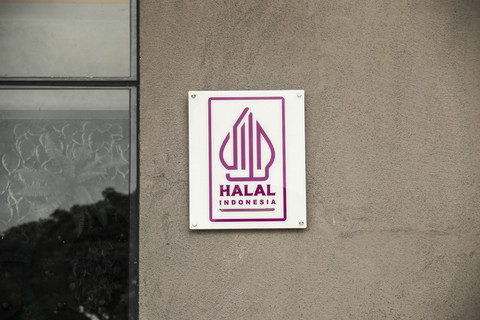
Recently, significant developments in international trade and US domestic policy have captured headlines, as reported by kumparanBISNIS on Saturday, February 21st. Key among these were the relaxed halal certification requirements for American products entering Indonesia and the US Supreme Court’s consequential decision to invalidate certain global tariffs, leading to calls for substantial refunds. These two stories underscore complex economic negotiations and legal challenges with far-reaching implications.
One major trade breakthrough involves an agreement between Indonesia and the United States, reducing reciprocal import duties on Indonesian goods to 19 percent. This pivotal accord, formalized in the Agreement on Reciprocal Trade (ART), includes a crucial condition: the easing of halal certification regulations for US products. Previously perceived as a significant non-tariff barrier, this relaxation is anticipated to substantially boost bilateral trade volume between the two nations.
Delving into the specifics of this trade agreement, the initial clause grants exemptions from halal certification in Indonesia for various US-manufactured products, particularly cosmetics and medical devices. This exemption also extends to containers and transport materials for manufactured goods, with the exception of those used for food, beverages, cosmetics, and pharmaceuticals. Crucially, Indonesia will not impose labeling or certification requirements for non-halal products imported from the US, although information on content and ingredients will remain mandatory.
The scope of these halal certification relaxations broadens beyond manufactured goods to encompass US food and agricultural products. This includes processed meats, provided their slaughtering practices adhere to either US standards or those of the Standards and Metrology Institute for Islamic Countries (SMIIC). Non-animal products, animal feed, and their respective transport containers are also exempt from halal certification. Furthermore, Indonesia is committed to streamlining the recognition process for US halal certification bodies and will exempt US packaging, storage, and warehousing companies from employee halal competency testing, removing the prior requirement for appointing halal experts.
Shifting focus to US domestic economic policy, the US Supreme Court delivered a landmark 6-3 ruling, asserting that Donald Trump overstepped his authority by implementing “reciprocal” global tariffs without congressional approval. Following this decisive judgment, prominent US governors, including Gavin Newsom (California), Kathy Hochul (New York), and JB Pritzker (Illinois), have vehemently urged Trump to return billions of dollars amassed from these tariffs. They argue that these tariffs constituted an illegal appropriation of funds that adversely impacted working families and businesses across the nation.
The economic ramifications of these tariff policies were profound. While the Supreme Court’s ruling did not directly address refund claims, the potential total reimbursement could skyrocket to USD 170 billion, representing over half of the cumulative tariff revenue collected. Governor Newsom highlighted the disproportionate losses borne by California, which accounts for approximately 14 percent of the national Gross Domestic Product (GDP). Similarly, Governor Pritzker is demanding nearly USD 9 billion for Illinois, estimating that the average tariff burden on households in his state reached approximately USD 1,700.
Despite the Supreme Court’s decision to revoke Trump’s authority to impose broad global tariffs under emergency powers, the ruling does not impact existing sectoral tariffs (such as those on steel and aluminum) or ongoing investigations that could lead to additional tariffs. The Court clarified that the International Emergency Economic Powers Act (IEEPA) does not explicitly grant the president the power to levy such widespread tariffs. However, Trump has already pledged to sign an order reimposing 10 percent global tariffs and initiating a new series of investigations, signaling that the contentious issue of tariffs will remain a significant economic debate.
Summary
Indonesia and the United States have reached an agreement to reduce reciprocal import duties to 19 percent, a key condition of which is the easing of halal certification requirements for US products entering Indonesia. This relaxation, aimed at boosting bilateral trade, includes exemptions for US cosmetics, medical devices, and certain food and agricultural products, while still requiring ingredient information for non-halal items. Indonesia will also streamline the recognition of US halal certification bodies and exempt some US companies from employee halal competency testing.
Separately, the US Supreme Court ruled that former President Donald Trump exceeded his authority by implementing “reciprocal” global tariffs without congressional approval. Following this decision, US governors have called for the return of billions of dollars collected, citing adverse impacts on businesses and families. While the ruling could lead to an estimated USD 170 billion in refunds, it does not affect existing sectoral tariffs or future investigations initiated by Trump, who has pledged to reimpose new global tariffs.
