
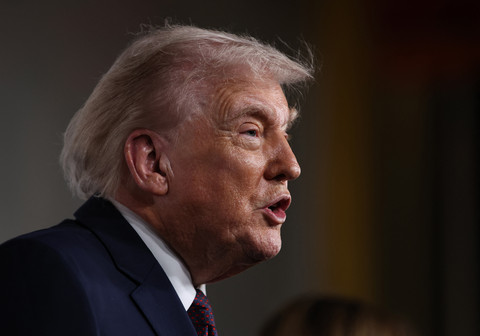
In a significant escalation of his administration’s trade stance, former United States President Donald Trump has reinstated a substantial increase in global import tariffs on goods entering the U.S. The tariffs, previously set at 10 percent, have been hiked to 15 percent, a policy change that became effective immediately. This assertive move, reported by AFP, came just a day after the U.S. Supreme Court curtailed a portion of his earlier, expansive tariff policies.
President Trump announced the new tariffs via his Truth Social account, directly challenging the recent judicial setback. “We are raising import tariffs to the 15 percent level, which is fully permissible and has been legally tested,” Trump declared, signaling his intent to push forward with his protectionist trade agenda despite legal challenges.
This decision was made after Trump reviewed the Supreme Court’s ruling, which he vehemently criticized as an “extraordinary, anti-American decision.” His swift reaction underscores the contentious nature of his trade policies and his unwavering commitment to using tariffs as a tool for economic leverage.
The Supreme Court had previously ruled that Trump had overstepped his presidential authority in implementing these particular tariffs, which had sent ripples through global trade. According to an AFP report, the conservative-dominated high court delivered a 6-3 decision, asserting that the International Emergency Economic Powers Act (IEEPA) does not grant the President the specific authority to impose such sweeping tariffs. Consequently, the tariff policies enacted under that emergency legislation were deemed unlawful.
Trump’s broader tariff strategy included “reciprocal” policies targeting trade practices Washington deemed unfair. His administration had also separately imposed tariffs on goods from Mexico, Canada, and China, citing concerns over illegal drug flows and immigration issues as justification for these specific measures.
In its deliberation, the Supreme Court reasoned that if Congress had intended to grant the President extraordinary power to impose tariffs via the IEEPA, such authority would have been explicitly stated within the act, as is customary in other tariff legislation. This underscores the Court’s emphasis on clear congressional intent when delegating significant economic powers.
It is important to note that this recent Supreme Court ruling does not impact existing sectoral tariffs that were separately imposed on imports of steel, aluminum, and various other commodities. Furthermore, several ongoing formal investigations that could potentially lead to the implementation of additional sectoral tariffs remain unaffected by this decision.
The Supreme Court’s ruling ultimately affirmed a lower court’s earlier decision, which had also declared IEEPA-based tariffs illegal. Last May, a trade court concluded that Trump had exceeded his authority with the comprehensive levies and largely blocked the policy. However, the enforcement of that ruling had been temporarily suspended while the government pursued its appeal, leading to the Supreme Court’s ultimate review and definitive judgment.
Summary
Former United States President Donald Trump has reinstated a significant increase in global import tariffs, raising them from 10 percent to 15 percent, effective immediately. This assertive move came just one day after the U.S. Supreme Court curtailed a portion of his earlier, expansive tariff policies. Trump announced the new tariffs via his Truth Social account, directly challenging the judicial setback and reiterating his commitment to a protectionist trade agenda.
The Supreme Court had ruled 6-3 that Trump overstepped his presidential authority by implementing these particular tariffs. It asserted that the International Emergency Economic Powers Act (IEEPA) does not grant the President specific power to impose such sweeping tariffs, deeming the enacted policies unlawful. However, this ruling does not impact existing sectoral tariffs on imports like steel and aluminum, nor does it affect several ongoing investigations for potential additional sectoral tariffs.
