
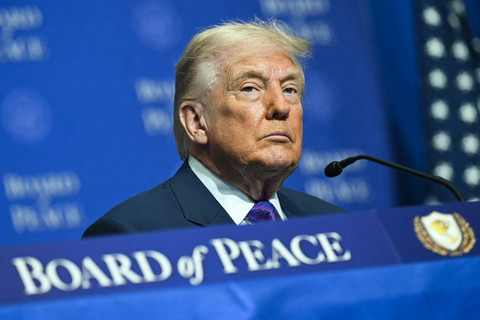
California Governor Gavin Newsom has urged former U.S. President Donald Trump to return billions of dollars in funds collected through tariffs, following a landmark Supreme Court decision that declared the globally imposed duties illegal. In a decisive 6-3 vote on Friday, February 20, the nation’s highest court ruled that Trump overstepped his authority by invoking emergency powers to implement what he termed “reciprocal” tariffs without congressional approval. The ruling underscored that federal law does not grant the president unilateral power to impose such broad tariffs.
Newsom, a Democrat widely considered a potential U.S. presidential candidate for 2028, seized the opportunity to directly challenge Trump. “It’s time to pay your debts, Donald. These tariffs were nothing more than an illegal money grab that drove up prices and hurt working families, just so you could damage long-standing alliances and strong-arm them,” Newsom declared in a statement quoted by Bloomberg on Saturday, February 21. He insisted that families and businesses, particularly in California, should receive full refunds along with interest. California was among several states that had challenged the tariff policies in court, reflecting Newsom’s consistent legal confrontations with the Trump administration, with the state’s Attorney General, Rob Bonta, frequently filing lawsuits on various disputes.
According to Newsom, Trump’s tariffs disproportionately burdened California, given its substantial role in the U.S. economy and global trade. The state alone accounts for approximately 14 percent of the national Gross Domestic Product (GDP), a figure that would position it as one of the world’s largest economies if it were an independent nation.
Adding to the chorus of demands, New York Governor Kathy Hochul echoed Newsom’s sentiments, asserting that the Trump administration “owes money that should go back into citizens’ pockets.” Similarly, Illinois Governor JB Pritzker delivered an “invoice” to Trump on Friday, February 20, demanding nearly $9 billion in tariff refunds for Illinois families. Pritzker urgently called for the White House to disburse the checks promptly, emphasizing the court’s 6-3 decision that Trump had exceeded his authority by using emergency powers to enact tariffs that disrupted global trade and escalated domestic prices.
The senior Democratic politician further warned of potential legal action if compensation was not provided. “Your tariff taxes have wreaked havoc on farmers, angered our allies, and sent grocery prices soaring,” Pritzker wrote, referencing the estimated $1,700 average burden per U.S. household last year, as calculated by Yale University experts. His demand for Illinois families reflects this significant financial impact.
The Supreme Court’s ruling effectively blocked one of Trump’s primary instruments for implementing his economic agenda. The conservative-dominated court, in its 6-3 decision, found that the International Emergency Economic Powers Act (IEEPA) does not grant the President the authority to impose such sweeping tariffs. Consequently, the tariff policies enacted under this emergency law were deemed invalid. Trump had long utilized tariffs as a potent leverage tool in trade negotiations, and his administration had previously used emergency economic powers to levy new duties against nearly all U.S. trading partners.
These tariffs included “reciprocal” policies targeting what Washington deemed unfair trade practices, alongside separate tariffs imposed on Mexico, Canada, and China, justified by concerns over illegal drug flows and immigration issues. The Supreme Court reasoned that if Congress had intended to grant such extraordinary tariff authority through the IEEPA, it would have explicitly stated so, as it has in other tariff legislation. It’s important to note that this ruling does not impact existing sectoral tariffs on imports like steel, aluminum, and other commodities, nor does it affect ongoing formal investigations that could lead to additional sectoral tariffs.
While the ruling definitively invalidated Trump’s broader tariffs, the Supreme Court did not specify how the refund claims should be handled, deferring that decision to lower courts. If fully approved, these claims could amount to an astounding $170 billion, representing more than half of the total tariff revenue collected, setting the stage for further legal battles over the repayment of these funds.
