
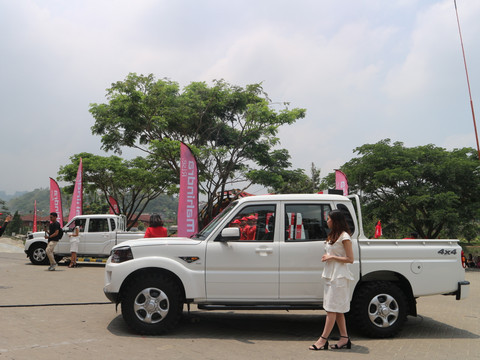

Indonesia is set to receive a substantial influx of light commercial vehicles, specifically pick-up trucks, originating from India. This significant order, placed by PT Agrinas Pangan Nusantara—a prominent entity within Indonesia’s State-Owned Enterprise (BUMN) landscape—is earmarked to bolster the operational capabilities of the Koperasi Desa/Kelurahan Merah Putih (KDKMP), or Village/Sub-district Cooperatives, across the archipelago.
The vast consignment comprises a total of 105,000 units from two leading Indian automakers. Tata Motors leads with an agreement for 70,000 units, split equally between 35,000 Yodha PU models and 35,000 Ultra T.7 trucks. Following closely, Mahindra contributes a substantial 35,000 units of its popular Scorpio Pik Up model, completing the impressive fleet destined for Indonesian shores.
These robust Indian-made vehicles are specifically engineered to navigate the diverse terrains and demanding conditions prevalent in Indonesia, according to Asif Shamim, Director of PT Tata Motors Distribusi Indonesia. This strategic supply not only addresses critical logistical needs but also serves as a strong testament to the growing acceptance and confidence in vehicles manufactured in India within the Indonesian market.
Shamim further elaborated on the transformative potential of this initiative, stating on Tata Motors’ official website, “This will significantly support agricultural logistics in Indonesia by enhancing connectivity and enabling more efficient movement of goods across extensive rural and regional networks.” The arrival of these vehicles is poised to streamline supply chains and empower local communities.

Echoing this sentiment, Nalinikanth Gollagunta, CEO of Mahindra Automotive Division, emphasized the collaboration’s anticipated impact. He highlighted its role in “strengthening the backbone of rural logistics and boosting the efficiency of farmer-to-market connectivity,” a crucial aspect for agricultural prosperity in Indonesia. This commitment underscores a shared vision for national development.
Gollagunta further affirmed Mahindra’s dedication, remarking in an official statement, “This partnership with Agrinas Pangan Nusantara is instrumental in supporting Indonesian Cooperatives. The collaboration reflects our unwavering commitment to fostering prosperity and actively contributing to national priorities.” The deal therefore extends beyond commerce, touching upon socio-economic development.
The cumulative import of 105,000 Completely Built Up (CBU) commercial vehicles from India represents an astonishing scale. This figure nearly rivals Indonesia’s entire wholesale sales volume for light commercial vehicles projected for 2025. Data compiled by the Gabungan Industri Kendaraan Bermotor Indonesia (Gaikindo), the country’s automotive industry association, indicates that the segment for pick-up and light trucks with a Gross Vehicle Weight (GVW) under 5 tons recorded sales of 107,008 units in a recent period.
Remarkably, Mahindra’s 35,000-unit order for the Scorpio Pik Up alone surpasses the company’s total export volume projected for the fiscal year 2025. This extraordinary contract with Indonesia is thus positioned as a primary catalyst for Mahindra’s global expansion next year, solidifying Indonesia’s role as a pivotal market in the automaker’s international strategy and showcasing the immense potential of this partnership.
Summary
PT Agrinas Pangan Nusantara, an Indonesian State-Owned Enterprise, has ordered 105,000 light commercial vehicles, specifically pick-up trucks, from India. This substantial fleet includes 70,000 units from Tata Motors (Yodha PU and Ultra T.7) and 35,000 Mahindra Scorpio Pik Up models. These vehicles are designated for Koperasi Desa/Kelurahan Merah Putih (KDKMP) across Indonesia and are engineered for diverse local terrains.
The strategic supply aims to significantly enhance agricultural logistics, improve connectivity, and enable more efficient goods movement in rural areas. This initiative is crucial for strengthening rural logistics and farmer-to-market connectivity, thereby supporting Indonesian Cooperatives and national development. The 105,000-unit import nearly rivals Indonesia’s entire projected light commercial vehicle wholesale sales for 2025, highlighting its immense scale and impact.
