
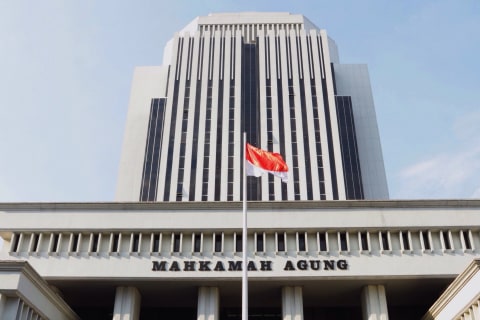

The Supreme Court has issued a stern warning to judges still engaging in corrupt practices, declaring that severe sanctions will be imposed on all found guilty of such violations. This emphatic stance underscores a renewed commitment to upholding integrity within Indonesia’s judiciary.
“The Chief Justice of the Supreme Court has unequivocally stated that there is no longer any room for tolerance or compassion towards any form of judicial corruption or breaches of judicial integrity,” announced Supreme Court spokesperson Yanto during a press conference on Monday, February 9th. This statement signals a critical turning point for the nation’s justice system.
Yanto further elaborated on the detrimental impact of shielding dishonest judges. He stressed that allowing such individuals to remain in power would severely undermine public trust and the credibility of the institution.
“The Chief Justice of the Supreme Court has made it clear to all judges and court officials involved in transactional court services, regardless of the value, that they face only two options: resignation or imprisonment,” Yanto asserted, highlighting the zero-tolerance policy now in effect.

This strong warning from the Supreme Court comes on the heels of a significant development. Recently, the Corruption Eradication Commission (KPK) conducted a swift sting operation (OTT) at the Depok District Court, apprehending several individuals, including judges. The operation was directly linked to alleged bribery in a high-profile land dispute case, shaking public confidence in local judicial processes.
The KPK’s investigation resulted in charges against five suspects implicated in this corruption scandal. These individuals include:
- I Wayan Eka Mariarta, identified as the Chief Justice of the Depok District Court;
- Bambang Setyawan, the Deputy Chief Justice of the Depok District Court;
- Yohansyah Maruanaya, a Bailiff at the Depok District Court;
- Trisnadi Yulrisman, the President Director of PT Karabha Digdaya; and
- Berliana Tri Kusuma, the Head of Corporate Legal at PT KD.
The alleged bribery scheme originated from a land dispute case in which PT Karabha Digdaya (PT KD) secured a victory against local residents at the Depok District Court. The contested land, spanning 6,500 square meters, is situated in Tapos, Depok.
Following the definitive legal ruling, PT KD sought prompt execution of the court’s decision, submitting a formal request for execution to the Depok District Court.
Upon receiving the execution application, Chief Justice Wayan and Deputy Chief Justice Bambang allegedly instructed Bailiff Yohansyah to negotiate a financial arrangement with PT KD. Through Yohansyah, the judges reportedly demanded a “fee” of Rp 1 billion (approximately USD 65,000) for processing the land execution.

However, PT KD found the initial demand of Rp 1 billion to be prohibitive, leading to negotiations that ultimately settled on an agreed payment of Rp 850 million (approximately USD 55,000). It was precisely during the handover of this money that the KPK launched its successful sting operation, catching the perpetrators in the act.
In a powerful demonstration of its unwavering resolve against corruption, the Supreme Court has firmly declared that it will not extend any form of legal assistance to the judicial personnel ensnared in the recent KPK operation.
Yanto reiterated this stance, stating, “As part of its commitment to safeguard the honor and dignity of the Supreme Court, the institution will not provide legal aid to the individuals concerned.” This action solidifies the Supreme Court’s dedication to purifying the justice system and holding all court officials accountable for their actions.
Summary
The Supreme Court has issued a stern warning to judges still engaging in corrupt practices, declaring zero tolerance for judicial corruption. The Chief Justice has made it clear that judges involved in transactional court services face only two options: resignation or imprisonment. This emphatic stance underscores a renewed commitment to upholding integrity within Indonesia’s judiciary.
This strong warning comes after a recent Corruption Eradication Commission (KPK) sting operation at the Depok District Court. Several individuals, including the Chief Justice and Deputy Chief Justice of the court, were apprehended for alleged bribery in a land dispute case, demanding Rp 850 million for land execution. The Supreme Court has affirmed it will not provide legal assistance to the judicial personnel caught in this KPK operation, solidifying its dedication to purifying the justice system.
