
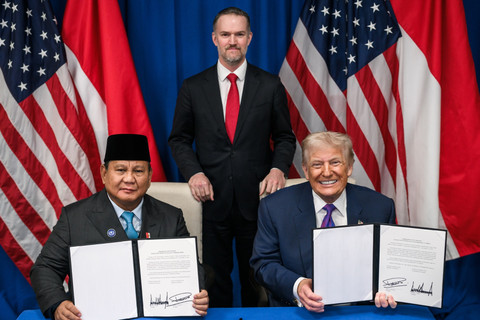

The Coordinating Ministry for Economic Affairs recently unveiled 22 crucial points clarifying the reciprocal tariff agreement meticulously negotiated and finalized between Indonesia and the United States (US) on February 19, 2026. This landmark deal promises to reshape trade relations between the two nations.
According to documents obtained by Kumparan on Sunday, February 22, the detailed explanation covers a spectrum of topics, from the substantial benefits Indonesia stands to gain to the expanded market access for products from both countries. Haryo Limanseto, Spokesperson for the Coordinating Ministry for Economic Affairs, provided an in-depth breakdown of these pivotal points. Here’s a comprehensive look:
1. What motivated the Indonesian Government to negotiate and reach an agreement with the US Government regarding Reciprocal Tariffs?
Answer:
• On April 2, 2025, the US Government unilaterally imposed Reciprocal Tariffs on countries contributing to the US trade deficit, including Indonesia, which faced a significant 32 percent tariff. (US Data: A deficit of USD 19.3 billion in 2024).
• The Indonesian government recognized the imperative of negotiations to safeguard the competitiveness of its export products and to protect the livelihoods of approximately 4-5 million direct workers in labor-intensive industries severely affected by these tariffs. Diplomacy was chosen over retaliatory actions, which could have inflicted greater damage on the national economy.
• Intensive negotiations between Indonesia and the US ultimately led to a reduction in Reciprocal Tariffs from 32 percent to 19 percent, announced on July 15, 2025. This was formalized in the Joint Statement on Framework ART (Agreement on Reciprocal Tariffs), indicating that both governments would promptly discuss and finalize the ART.
• The ART Agreement was officially signed by the Presidents of Indonesia and the US on February 19, 2026. This agreement established the reciprocal tariff rates and, crucially, tariff exemptions for Indonesia’s flagship products such as palm oil, cocoa, coffee, rubber, and textiles entering the US market.
2. When will the ART come into effect?
Answer:
• The agreement is set to take effect 90 days after both countries provide written notification confirming the completion of their respective domestic legal procedures, including consultations with relevant institutions and ratification.
3. Can the ART be evaluated and amended?
Answer:
• This agreement is subject to evaluation and amendment at any time, provided there is a written request and mutual consent from both parties.
4. Beyond the reduction in Reciprocal Tariffs, what other benefits does Indonesia gain from the ART?
Answer:
• Indonesia will secure a 0 percent Reciprocal Tariff for its prime export commodities, including palm oil, coffee, cocoa, and other key products.
• Tariff exemptions will apply to a substantial 1,819 Indonesian products, comprising 1,695 industrial goods and 124 agricultural products, under Most Favored Nation (MFN) treatment.
• For Indonesian textile products, the US has committed to tariff reductions, potentially reaching 0 percent, through a Tariff-Rate Quota (TRQ) mechanism.
• The agreement facilitates increased investment, particularly in high-tech sectors such as ICT, medical devices, and pharmaceuticals. This is supported by adjustments to Local Content Requirement (TKDN) policies, domestic specification regulations, and internal deregulation.
• Indonesia’s commitment to implementing Strategic Trade Management signals to the global business community its serious dedication to fostering a secure business ecosystem and ensuring that high-tech, high-value goods are not misused.
• By easing import licensing and standardization requirements for US agricultural products, Indonesian businesses are expected to source raw materials more efficiently, ensuring smooth production processes and bolstering national food security programs.
• Indonesia commits to fostering investment flows by easing foreign ownership restrictions for US companies in specific sectors, including mining divestment and certain limitations in the financial sector.
5. What market access commitments has Indonesia granted to the US?
Answer:
• Indonesia will open its market to 99 percent of US-origin products with a 0 percent tariff rate, which will become effective upon the Agreement’s Entry Into Force (EIF).
• Indonesia is committed to eliminating Non-Tariff Barriers for the US, particularly concerning import licensing, Local Content Requirement (TKDN) provisions, recognition of US standards, and halal certification.
6. What US products will Indonesia purchase as part of the ART agreement?
Answer:
• As a strategic move to balance foreign trade and meet domestic energy demands, Indonesia has agreed to procure metallurgical coal, LPG, crude oil, and refined gasoline from the US.
• Indonesia has also consented to purchase aircraft, including components and aviation services, aimed at enhancing the competitiveness of its national and regional aviation service industry.
• Furthermore, Indonesia will increase its procurement of US agricultural products, designated as raw materials for specific food and beverage industries and the textile sector.
7. What were the government’s considerations for agreeing to import 1,000 tons of rice from the United States?
Answer:
• The government agreed to allocate import quotas for special classification rice from the US; however, the actual realization remains contingent on domestic demand.
• Over the past five years, Indonesia has not imported rice from the US. The commitment to import only 1,000 tons of US rice is statistically insignificant, representing a mere 0.00003 percent of the total national rice production, which reached 34.69 million tons in 2025.
8. Does the policy of opening the tap for US chicken product imports risk flooding the market and disrupting domestic chicken farmers?
Answer:
• Indonesia imports US chicken products in the form of live poultry, specifically for Grand Parent Stock (GPS), totaling 580,000 birds (with an estimated value of USD 17-20 million). GPS is critically needed by domestic chicken farmers as a primary genetic source, given that Indonesia currently lacks GPS breeding facilities.
• Furthermore, the import of chicken parts such as leg quarters, breasts, legs, or thighs has never been prohibited, provided they meet animal health requirements, food safety standards, specific needs, and applicable technical regulations.
• For domestic food industry requirements, Indonesia also imports mechanically deboned meat (MDM) as a raw material for sausages, nuggets, meatballs, and other processed products, with an estimated import volume of 120,000-150,000 tons per year.
• The government remains committed to prioritizing the protection of domestic farmers and maintaining the balance of national chicken supply and prices. No policy will be implemented at the expense of the domestic industry.
9. Is it true that Indonesia is opening corn imports and is obligated to import US corn annually, potentially disrupting domestic production?
Answer:
• This provision stipulates that Indonesia grants access for US corn imports specifically for the food and beverage (F&B) industry, with a certain annual volume. The corn import requirement for the F&B industry in 2025 is approximately 1.4 million tons. US corn products possess the specific quality and standards required by the F&B industry.
• This provision is vital for Indonesia to ensure an adequate supply of essential raw materials for the F&B industry, which contributes 7.13 percent to the National GDP, accounts for 21 percent of total non-oil and gas industrial exports (valued at USD 48 billion), and employed up to 6.7 million people in 2025.
10. What is the government’s rationale for agreeing to allow US alcoholic beverage products into Indonesia?
Answer:
• Based on 2025 data, Indonesia’s total import value for alcoholic beverages stood at USD 1.23 billion. Imports of US-origin alcoholic beverages accounted for approximately USD 86.1 million, representing only 7 percent of the total alcoholic beverage imports. This figure is relatively small compared to imports from European countries.
• The availability of diverse and high-quality products enhances Indonesia’s competitiveness as an international destination and boosts tourism spending. Concurrently, Indonesia actively protects and promotes its domestic alcoholic beverages, such as beer and wine, as key export products.
• All alcoholic beverage imports remain subject to licensing requirements, information disclosure, and food-beverage safety regulations from BPOM (Indonesia’s National Agency of Drug and Food Control).
11. Is it true that the government permits the entry of used clothing from the United States, potentially disrupting the national textile industry?
Answer:
• This is incorrect. The agreement specifically regulates the import of shredded worn clothing (SWC), which refers to textiles that have been destroyed and processed into industrial raw materials. These materials hold no economic value as wearable used clothing sold back into the market (thrifting).
• SWC is imported to serve as raw material for the production of rag cloth and recycled textile products (yarn). This differs substantially and is distinct from the existing ban on importing ready-to-wear used clothing.
• The government has ensured that domestic industries are in place to absorb all imported SWC as production raw material, preventing any of these products from entering the market as second-hand apparel.
12. What action will the government take if imported US products inundate the domestic market?
Answer:
• Through the provisions of this ART, the Governments of Indonesia and the US have established a Council on Trade and Investment. This forum will periodically discuss the implementation of the agreement, including addressing any significant surge in imports that could disrupt domestic market stability or bilateral trade.
13. How does the government ensure that Indonesian citizens’ personal data will not be misused by the United States?
Answer:
• The data transfers agreed upon in the ART remain subject to domestic regulations, specifically the Personal Data Protection Law. The data referred to in the agreement is data necessary for business operations (application systems). Cross-border data transfer is a fundamental infrastructure for e-commerce, digital financial services, cloud computing, and other digital services.
• This signifies that there is no surrender of data sovereignty. The government guarantees that both physical and digital data transfers (cloud and cable transmissions) will be conducted within a framework of secure and reliable data governance, without compromising citizens’ rights.
• The certainty provided by data transfer regulations strengthens Indonesia’s position as a regional digital economic hub. Global technology companies require regulations that facilitate cross-border data processing with adequate data protection. With credible governance, Indonesia can attract investments in data centers, cloud infrastructure, and other digital services.
14. Is the government exempting all US products from halal certification?
Answer:
• No. Indonesia continues to enforce halal certification for food and beverage products. Meanwhile, food and beverages containing non-halal ingredients must be clearly labeled as such. This measure is implemented to protect domestic consumers.
• For US-origin cosmetics, medical devices, and other manufactured products, adherence to product safety and quality standards, good manufacturing practices, and detailed product content information will remain mandatory. This ensures that Indonesian consumers are fully informed about the products they intend to use.
• Indonesia and the US have also established a Mutual Recognition Agreement (MRA) with foreign halal certification bodies (LHLN) in the United States. This cooperation allows halal labels issued in the US to be recognized in Indonesia. This is crucial given the increasing demand in the Indonesian market for high-quality halal products, particularly meat and other consumer goods from the US.
15. Will the elimination of import duties to 0 percent for over 99 percent of US products negatively impact MSMEs and local industries?
Answer:
• Fundamentally, Indonesia’s MFN import duties are already relatively low, with an average effective tariff rate of approximately 8.1 percent. Indonesia has also implemented 0 percent tariffs through various Free Trade Agreements (FTAs/CEPAs) with other major partner countries. Trading partners already bound by agreements with Indonesia represent about 80 percent of Indonesia’s total trade.
• The majority of products benefiting from the 0 percent tariff facility are input goods, raw materials, capital goods, and industrial components that meet US quality and standards. These products are precisely what domestic businesses, including MSMEs, need to produce goods with competitive quality, standards, and prices for both domestic and export markets.
• Furthermore, if any trade activities threaten the existence and sustainability of local industries, the Indonesian government can apply additional duties (Safeguard, Anti-dumping, and Anti-subsidy measures) in accordance with WTO rules.
16. Is it true that medical devices and pharmaceutical products from the United States will be directly accepted without re-testing in Indonesia? Does this policy weaken the role of BPOM?
Answer:
• BPOM (Indonesia’s National Agency of Drug and Food Control) and the U.S. Food and Drug Administration (FDA) have a history of extensive technical cooperation, encompassing product safety standard harmonization, product safety information exchange, and the oversight of medicines, vaccines, and cosmetics.
• Consequently, Indonesia recognizes marketing authorizations issued by the U.S. Food and Drug Administration (FDA) as sufficient proof that a product meets established safety, quality, and efficacy standards. The FDA is globally renowned as one of the most stringent regulatory bodies for medicines and medical devices.
• This means that if a product has undergone rigorous evaluation in the United States, Indonesia will not need to repeat the entire testing process from scratch, thus avoiding duplication of identical procedures.
• Nevertheless, products must still undergo administrative licensing processes in Indonesia and remain under BPOM’s supervision. However, the technical evaluations conducted by the FDA will be acknowledged as adequate evidence to fulfill Indonesia’s marketing authorization requirements.
• Should significant safety, efficacy, or quality issues arise in the future, Indonesia retains the authority to take supervisory action as deemed necessary.
17. Is it true that US companies are exempted from Local Content Requirements (TKDN)? Does this mean the TKDN policy is entirely abolished?
Answer:
• The TKDN policy remains in effect and is applied within the context of government procurement. This means TKDN provisions are tied to projects or government expenditures, not all goods circulating in the market. This policy serves to promote the use of Indonesian-made products.
• Conversely, goods sold commercially in the national market or directly to consumers are generally not subject to TKDN requirements.
• Therefore, this provision does not alter the competitive landscape for goods in the retail or broader industrial market and does not inherently create an unfair situation for domestic businesses.
18. Is the government exempting US companies from Value Added Tax (VAT)?
Answer:
• No. Indonesia continues to impose VAT on the activities of US companies.
• This agreement ensures that the imposition of VAT is not discriminatory solely against US companies. The Indonesian government will continue to levy VAT on US companies, provided that the same provisions are applied equally to companies from other countries.
19. Does cooperation on critical minerals imply that Indonesia will export raw critical minerals to the US?
Answer:
• No. Indonesia will not permit the export of critical mineral raw materials to the United States. The government is not relaxing its ban on raw material exports through this agreement.
• On the contrary, the ART encourages US companies to collaborate with Indonesian firms in implementing downstream processing policies and developing processing industries for critical minerals and rare earths. US companies can engage in mining and processing activities domestically, and the processed commodities can then be exported, in line with current business practices and existing regulations.
20. Does Indonesia agree not to mandate US Digital Platform Companies (PPD) to collaborate with press companies?
Answer:
• Within the ART, Indonesia has only acceded to the US request not to mandate PPDs to collaborate with press companies through paid licensing mechanisms, revenue sharing, and sharing of aggregated news user data.
• However, the obligation for PPDs to collaborate with press companies remains possible through other forms of cooperation agreed upon, in accordance with Article 7, paragraph (3), letter d.
• Voluntary agreements can also serve as an option for cooperation schemes between US PPDs and press companies.
• Currently, the imposition of a Digital Service Tax or VAT on PMSE (Perdagangan Melalui Sistem Elektronik – Trade Through Electronic Systems) is being considered, mirroring best practices in several OECD countries (France, UK, Italy, Spain, Austria) at rates between 2-7 percent. The revenue from this tax would be utilized for the establishment of a Digital Literacy Development Fund or a similar entity to support quality journalism for domestic news agencies.
21. What commercial agreements were reached in this ART?
Answer:
• In an effort to balance trade and ensure the supply of essential products needed by Indonesia from the US, several significant commercial agreements were formalized within the ART, including:
-
The purchase of energy products (LPG, crude oil, & gasoline) valued at USD 15 billion.
-
The acquisition of commercial aircraft and aircraft components worth USD 13.5 billion.
-
The procurement of agricultural products (cotton, soybeans, soybean meal, wheat, and corn) amounting to USD 4.5 billion.
22. Does the ART agreement also address security issues and matters related to the South China Sea?
Answer:
• The ART exclusively pertains to agreements concerning trade and investment. It explicitly does not address non-economic issues such as defense and security matters.
• Furthermore, the ART intentionally excludes discussions related to national security and border security.
Summary
The Indonesian government has unveiled 22 key points clarifying the reciprocal tariff agreement finalized with the United States on February 19, 2026. This landmark deal was primarily driven by the US’s earlier imposition of 32% tariffs on Indonesian products, leading to negotiations that reduced these tariffs and formalized reciprocal rates. Indonesia will benefit from a 0% reciprocal tariff for prime export commodities like palm oil and coffee, tariff exemptions for 1,819 products, and potential textile tariff reductions.
In exchange, Indonesia will open its market to 99% of US products at a 0% tariff, eliminate certain non-tariff barriers, and commit to procuring significant amounts of US energy products, aircraft, and agricultural goods. The government clarified specific imports like a small quota for special classification rice and shredded worn clothing for industrial use, not secondhand apparel. The agreement also includes safeguards like a Council on Trade and Investment to address import surges, while reaffirming adherence to domestic laws on data protection, local content requirements, and the ban on raw critical mineral exports.